Trusted by those who value real craftsmanship

Why Choose Brown Maple Cabinets?

You choose brown maple when the finish matters more than the grain. Oak and hickory carry visible texture, which is the point in a stained kitchen. Brown maple works the other way. Its grain is tight and closed, so a painted door reads as one flat plane and the color is what you see. It is the standard wood for a painted kitchen, and it takes a dark stain just as cleanly.

It ages in your favor too. Fifteen years in, a painted brown maple kitchen shows wear where hands actually land, around the pulls and along the top edge of the sink base. Where it does show, the door is sanded back and touched up in place, and the closed grain lets the repair blend rather than read as a patch.

Get the Color Right the First Time

A finish on a screen is not a finish in your kitchen. Light and flooring move a color a shade or two. Samples are $12, so you can see one in the room before you commit. The full range is in our Brentwood showroom.
Order a sample
Kitchen Cabinets

Kitchen Cabinets

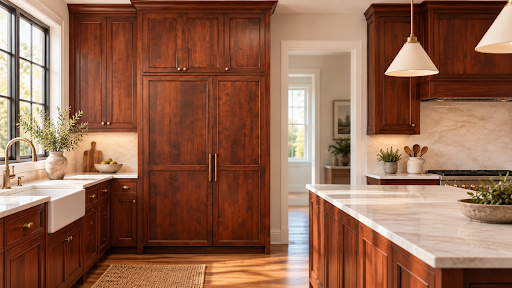
A brown maple kitchen is almost always a painted kitchen, and that is the reason the wood gets specified. Painted uppers over a stained island, a white perimeter with a darker sink base, or a whole room in one soft grey. The finish sits flat on all of it, so the door reads as a shape rather than as a piece of wood. Layout is the other half of the job. We build to the room rather than to a catalog of box sizes, so a wall that measures 94 inches gets 94 inches of cabinet instead of 90 and a filler strip. Corners, appliance runs, and ceiling height get worked out on paper before anything is cut.

View more →
Bathroom Vanities

Bathroom Vanities

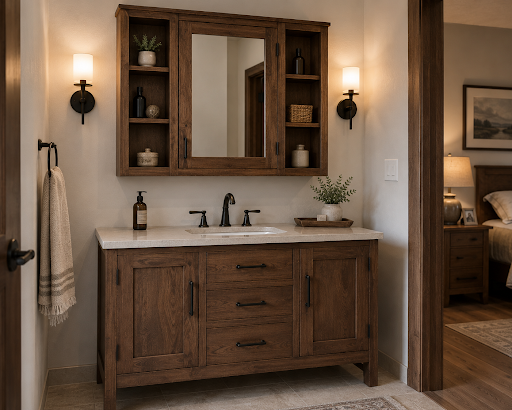
Brown maple suits a bathroom for the same reason it suits paint. The grain is closed, so a sealed finish has a smooth, even surface to bond to and fewer places for moisture to work into. That matters in the room that sees the most steam and the widest temperature swings in the house. Size is rarely the constraint. We build brown maple vanities from narrow powder room widths through full double vanities, with the drawer banks worked around your plumbing rather than around a standard cabinet box.

View more →
Laundry and Utility Cabinets

Laundry and Utility Cabinets

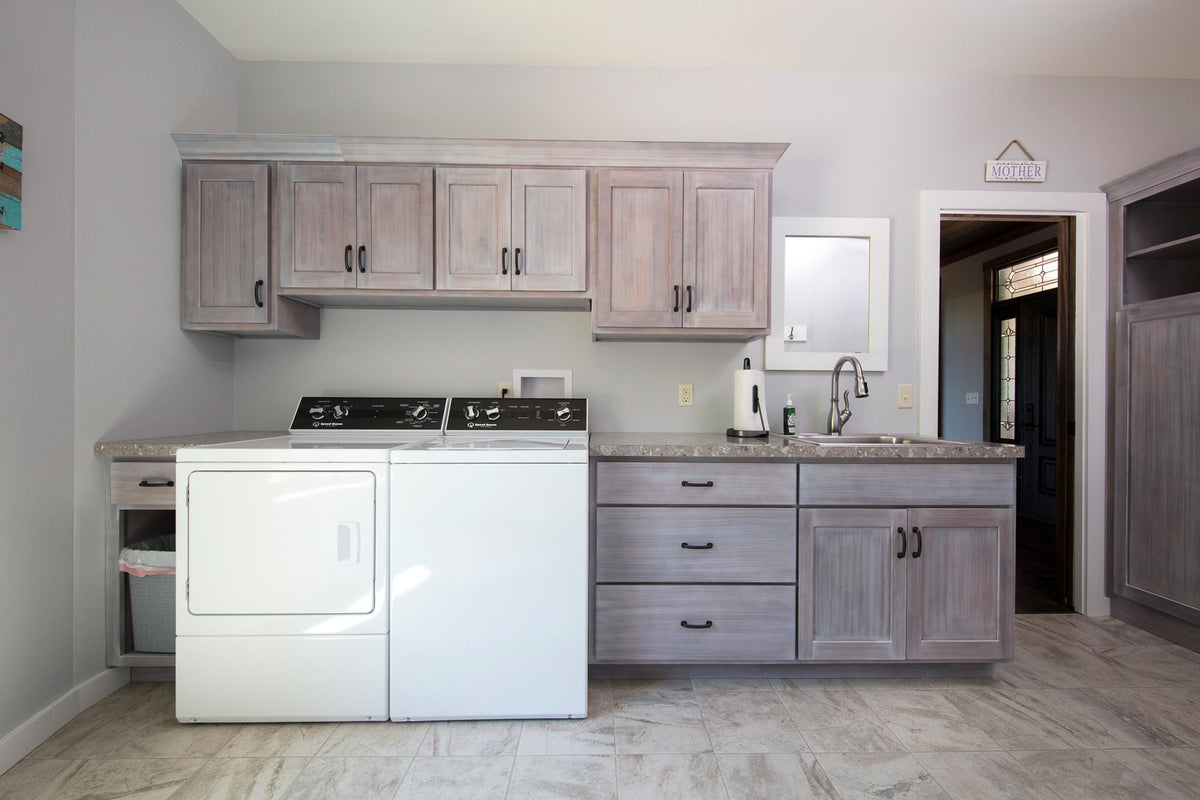
Brown maple belongs in a laundry room because of what happens after the knock. Baskets swing into door fronts, detergent runs down a cabinet side, and something heavy lands on the folding counter most weeks. A painted brown maple door can be sanded at the damage and touched up in place, and the closed grain lets the repair blend instead of showing as a patch. The rest of the room gets built to the same spec. Base and tall cabinets, a folding counter, a sink surround, and hanging space, all finished to match whatever the kitchen already is.

View more →
Storage and Built-Ins

Storage and Built-Ins

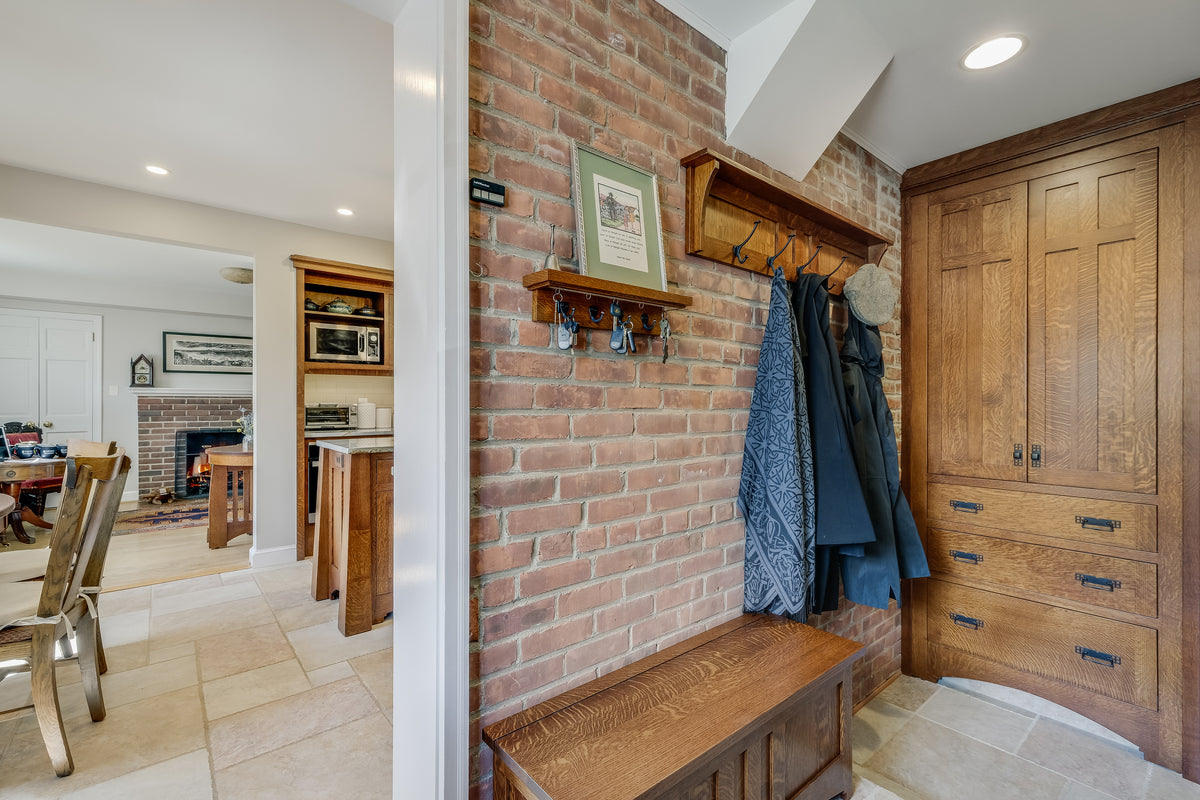
Built-ins have a harder job than kitchen cabinets. A kitchen is allowed to be its own thing, while a mudroom locker or a wall of shelving has to look like it was always part of the house. That is a color matching problem, and brown maple is the easiest wood we build in to match. A closed grain surface holds a color exactly as it was mixed, so paint pulled to your existing trim reads as the same white rather than a near miss. Mudroom lockers, closet systems, media walls, window seats, and office built-ins all get built to the same spec as a kitchen, in the same finish, by the same shop.

How Brown Maple Looks and Takes Finish

Brown maple runs from a pale cream through tan to a soft grey brown, usually with darker mineral streaks running through it. Left natural, it is quiet, which is exactly why it rarely gets left natural. This is a wood chosen for what goes on top of it rather than for what it shows on its own.

Both paint and stain sit on it evenly. Brown maple takes color without blotching, so deep browns and near blacks go on clean and stay consistent across a whole run of doors. Stained the right shade, it reads close to cherry, which is why it turns up in so many traditional kitchens.

Every Hardwood We Build In

The same craftsmen build in six other hardwoods, and no two put the same character into a room. See what each one brings.

Cherry

Cherry

Darkens as it ages, and is the most formal wood on the list.

Hickory

Hickory

The hardest wood we build in, with the most movement in the grain.

Hard Maple

Hard Maple

Harder than brown maple, and the palest wood we build in once it is finished clear.

Oak

Oak

Open grain and warm color, the wood most people picture when they picture a kitchen.

Golden Pecan-Quartersawn White Oak

Quartersawn Oak

Straight grain with ray fleck, cut the slow way for a craftsman kitchen.

Walnut

Walnut

Deep brown straight out of the tree, so it needs no stain at all.

Ready to Design Your Brown Maple Cabinets?

Visit our Brentwood showroom to see the full range of finishes on the wall, or book a consultation, and we will work through layout, line, and finish with you. Our design team specs your room, and our Amish and Mennonite craftsmen in Ohio and Indiana will build it to your preference.
Book a Consultation

Frequently Asked Questions

Brown maple is the heartwood of the soft maple tree, cut from the darker center of the log. It is a close-grained North American hardwood, softer than hard maple, and the wood most often used for painted and dark-stained cabinetry.
Yes, particularly for painted kitchens. It is the wood most painted cabinetry is built from, because the finish sits flat and the color is what you see. If you want visible grain in a natural or lightly stained kitchen, hard maple or white oak suits that better.
Better than any wood we build in. Its closed grain means a painted surface stays flat, with no texture showing through the color. It is also why a chip or scuff can be sanded and touched up in place without the repair showing.
Yes, and it is one of the best woods for it. Brown maple takes stain evenly rather than blotching, so deep browns and near blacks go on clean and stay consistent across a full run of doors. Stained the right shade, it reads close to cherry.
Yes. Brown maple is the more economical of the two, which is part of why it is so widely used for painted cabinetry. You are paying for a wood chosen to disappear under a finish rather than for grain you will cover anyway.
Yes. It is softer than hard maple or hickory, so a hard knock will mark it more readily, but it is solid hardwood throughout and it repairs well. A damaged painted door can be sanded and touched up in place rather than replaced.
Yes. Closed grain gives a sealed painted finish a smooth surface to bond to, which is why painted brown maple vanities hold up well against humidity. We build them from powder room widths through full double vanities, sized to your plumbing.