Trusted by those who value real craftsmanship

Why Choose Euro Cabinets?

Because nothing stands between you and the shelf. A face frame adds a rim of wood around the front of the box, and a Euro cabinet replaces that rim with nothing at all. Pairs of doors meet without a stile down the middle, so a thirty-six inch cabinet opens thirty-six inches wide. Pan drawers run out to the slide clearance and stop there.

The hardware is where the long view sits. Each door hangs on concealed hinges that adjust up, across and in, so a front that shifts after a few heating seasons is squared again with a screwdriver rather than a shim. The door edge is exposed by design, and because ours are solid hardwood, a scuff sands out and takes finish again. Interiors are finished too, since on a frameless box you see them.

What Frameless Changes in Your Layout

You now know what a frameless box does. What it does in your kitchen depends on your wall lengths, your appliance gaps and how many drawers you want. Tell our design specialist those three things and you will have a straight answer in one call.
Talk to a Specialist
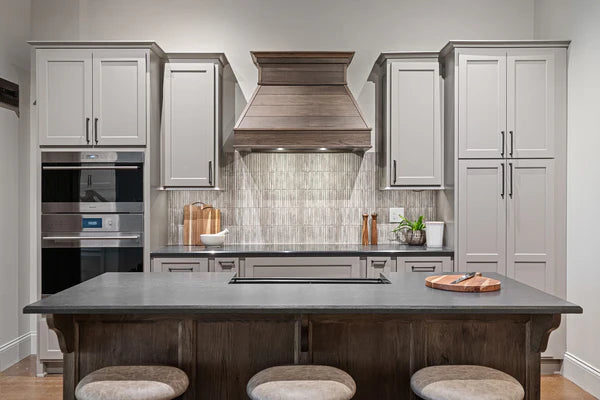
Kitchen Cabinets

Kitchen Cabinets

A kitchen is where the missing frame pays for itself twice a day. Sheet pans, stock pots and stand mixers all go in through the full width of the opening instead of past a stile, and the drawer boxes that hold them are wider for the same cabinet size. Deep pan drawers under a cooktop are the clearest example. Long runs read differently too. Narrow, even reveals between the doors turn a wall of cabinetry into one surface rather than a row of framed squares, which is why frameless suits galley kitchens and island backs where the eye travels straight down the line.

View more →
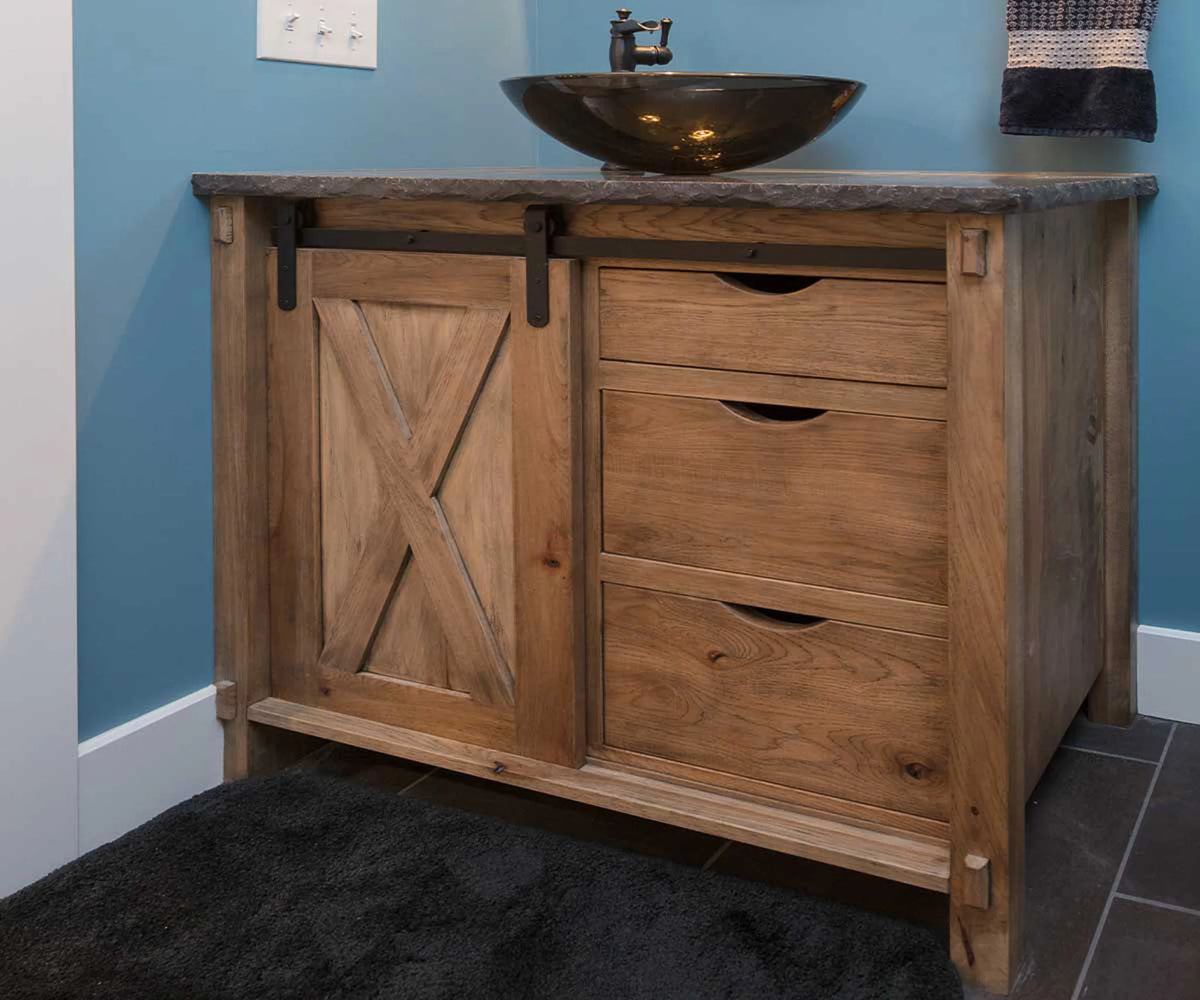
Bathroom Vanities

Bathroom Vanities

Vanities are shallow, so every inch the frame would have taken is an inch you notice. A frameless vanity box gives you the full cabinet width for baskets, bins and a pull out hamper, and it leaves more room to work around the trap and supply lines underneath. Humidity is the other half of a bathroom. Our boxes are built from solid hardwood and sealed inside and out, and finished interiors wipe clean when a bottle leaks or a towel goes back damp. Hold the room between thirty and fifty percent relative humidity and the fronts stay where they were set.

View more →
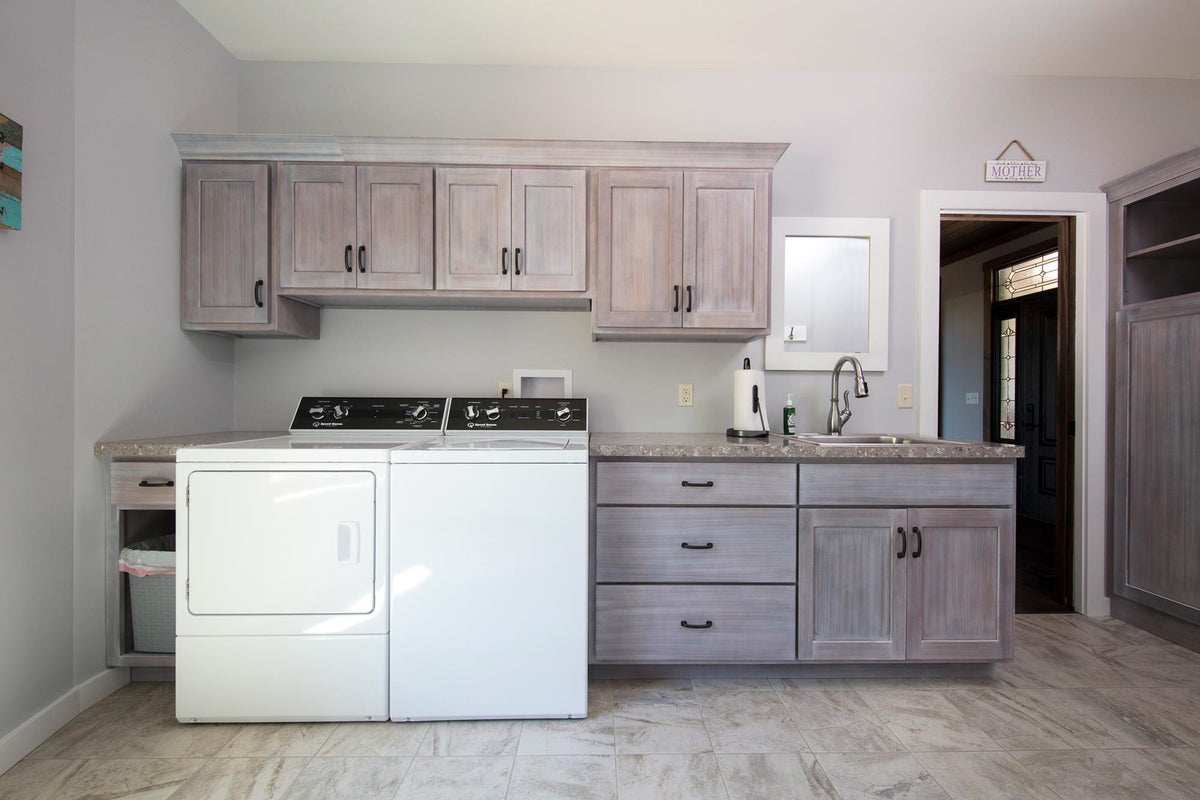
Laundry and Utility Cabinets

Laundry and Utility Cabinets

Laundry storage is tall, narrow and used in a hurry, which is a good argument for an unobstructed opening. Detergent jugs and folded stacks load straight in, and a double door cabinet over the machines opens clear across instead of meeting in the middle. The room is also hard on cabinetry. Lint, damp air and the odd knock from a basket all land on the fronts, and solid hardwood takes that better than most surfaces because it can be sanded and touched up in place rather than replaced. Finished interiors mean a spilled capful wipes off the shelf.

View more →
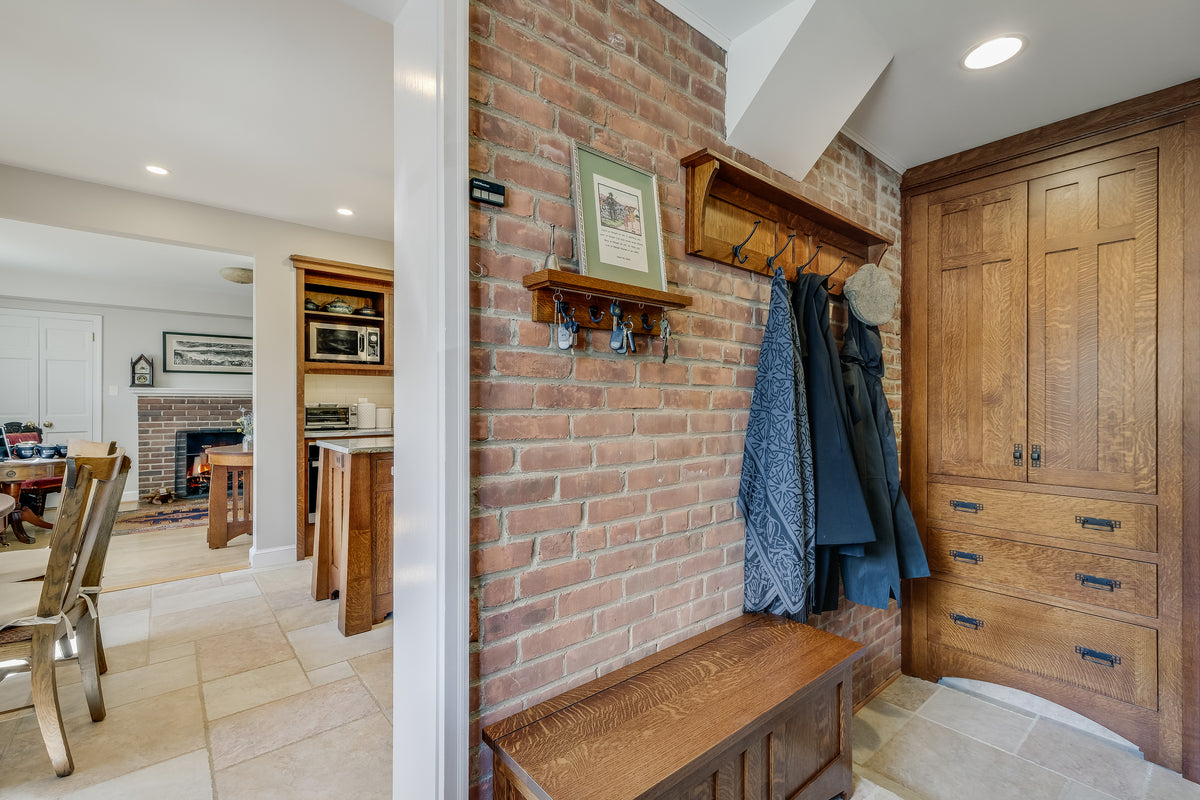
Mudrooms and Entryways 

Mudrooms and Entryways 

Mudrooms are tight, and flush fronts keep them that way. With no frame standing proud of the box, a bank of lockers sits as one flat wall in a walkway where two people pass with coats and bags, and the cubbies behind the doors use the full width of each bay. Build it to the ceiling and the proportions still work. Tall doors on a frameless box carry their own weight on concealed hinges, so a seven foot front swings true, and the same hardwood and finish run through from the bench to the top boxes.

How Euro Cabinets Look and Close 

Up close, a Euro cabinet is a grid of narrow gaps. The doors sit over the whole box with only a hairline of shadow between them, so the fronts read as one plane and the shadow lines do the work the frame would otherwise do visually. Nothing of the carcass shows from the front except the edges of the end panels.

Open one and the hardware disappears. Hinges fold into the door and the cabinet side, drawer slides run under the box, and what you see is finished hardwood on the shelf, the interior walls and the back of the door. Everything that makes it move is behind something.

 Every Cabinet Style We Build

Two choices live in every cabinet front. The first four below set how much of the frame you see, and Euro is the one with none. The six after them are door shapes, and any shape pairs with any.  

Inset Cabinets

Doors set down inside the frame so the two finish level in one plane.  

 Face Frame Cabinets 

A hardwood frame across the front of every box, ready to take any overlay. 

 Partial Overlay Cabinets 

The door laps part way over the frame and leaves a band of wood showing.  

 Full Overlay 

The door runs nearly to the frame edges and keeps the frame out of sight.  

Shaker Cabinets 

A flat panel in a square frame, which is why it suits almost any room. 

 Farmhouse Cabinets 

The country kitchen look, with plain, sturdy fronts and warm, worked finishes. 

 Raised Panel Cabinets 

A shaped center panel that catches the light and gives the door real depth. 

 Rustic Cabinets 

Knots, mineral streaks and color swings left in rather than sorted out. 

 Traditional Cabinets 

Stepped moldings and layered detail, for a kitchen meant to feel settled. 

 French Cabinets 

Curved rails and carved edges, the most decorative shape on this list.  

Ready to See a Frameless Box Open? 

Pull a drawer in our Brentwood showroom and the width explains itself in a second. Not nearby? Book a call instead. Our design team specs the room, Amish and Mennonite craftsmen in Ohio and Indiana build it, and we install across greater Nashville and ship nationwide.
Book a Consultation

Frequently Asked Questions

Euro cabinets, also called frameless cabinets, are built without the face frame that rims the front of a traditional box. The doors mount straight to the cabinet sides, so the whole front of the cabinet is door and the whole opening is usable.
Yes. The strength moves into the panels. Full-thickness sides, a solid top and bottom and a captured back brace the box on their own, which is how frameless construction has been built in Europe for decades and how we build it here.
Enough to notice on every cabinet. The opening is the full inside width of the box; double-door cabinets have no center stile, and drawer boxes run out to the slide clearance. The gain shows up most in deep pan drawers and shallow vanities.
All of ours are. Brown maple, hard maple, oak, quarter-sawn white oak, hickory, cherry and walnut are all available frameless, in the same finishes as our framed work, with solid hardwood doors rather than a wrapped substrate. An edge that takes a knock sands back and refinishes in place.
No. Construction and door shape are independent choices here, so a raised panel or a traditional profile can sit on a frameless box. The result is a quieter version of a classic kitchen, with the same door you would have picked anyway.
They are made to order, not pulled from stock. Fully custom work runs eight to twelve weeks from approved drawings, and our design team will confirm the timeline for your layout before anything goes to the shop. Door style and finish do not move that date. Box count and specialty interiors can.
Species, door style, finish and the number of custom-sized boxes in the run. Specialty interiors, glass fronts and tall panel work add to it. Our design team prices the drawing rather than quoting a per-foot figure, because no two layouts have the same box count.