Trusted by those who value real craftsmanship

Why Choose Cherry Wood Cabinets?

You choose cherry when you want the wood itself to be the feature. The grain is fine and close, so what you notice is color rather than pattern. That color starts light, a pale reddish tan, and deepens over the first year into the warm brown most people picture when they think of cherry.

It keeps deepening after that, more slowly, for the life of the kitchen. A cherry kitchen looks better at year five than it did the week it went in, which is true of very few things in a house. The one thing to know is that wood under a permanently placed object darkens more slowly than the rest, so it is worth moving things around over the first year.

Get the Color Right the First Time 

A cherry sample shows you where the color starts, not where it ends. It will be lighter in your hand than it will be in a year. Samples are $12, and the Brentwood showroom has finished cherry that has already done most of its darkening.
Order a sample
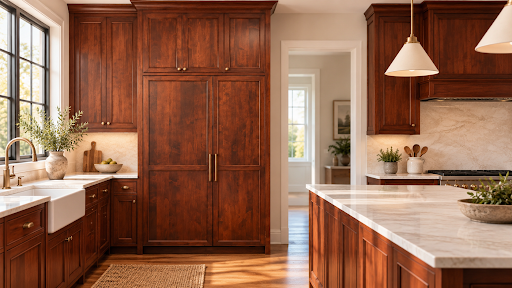
Kitchen Cabinets

Kitchen Cabinets

A cherry kitchen is a stained or clear-finished kitchen, because covering cherry with paint defeats the reason for choosing it. The finish is there to protect the wood and let the color through, not to change it. Light is the variable worth planning around. Cherry darkens fastest where daylight reaches it, so a run of cabinets under a south-facing window will pull ahead of the ones across the room for the first year or so. It evens out. Knowing it is coming is the difference between watching it happen and worrying about it.

View more →
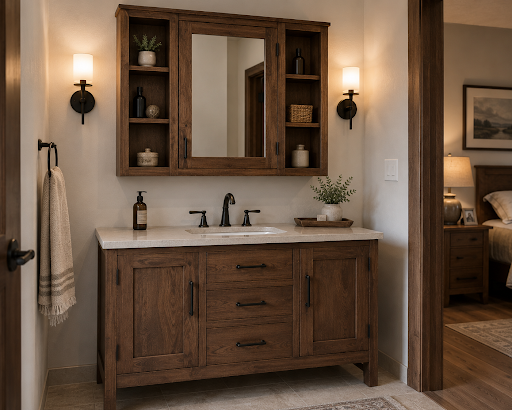
Bathroom Vanities

Bathroom Vanities

Cherry in a bathroom does something it cannot do in a kitchen, which is stay close to its original color. Most bathrooms get far less direct daylight, so a cherry vanity darkens slowly and holds the lighter reddish tan for years. That makes it worth deciding deliberately. If the vanity is meant to match a cherry kitchen, it will take longer to catch up and may never fully arrive. If it is its own room, the slower change is an advantage. We build cherry vanities from powder room widths through full double vanities, sized to your plumbing.

View more →
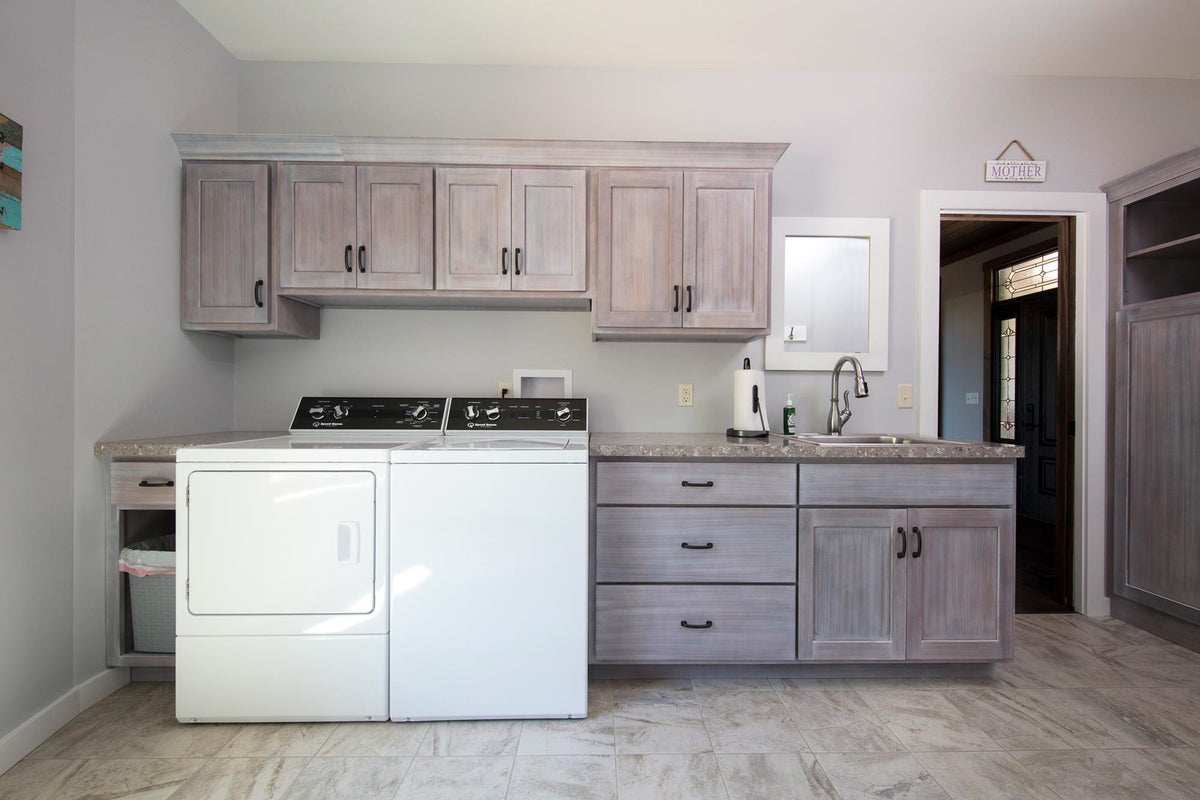
Laundry and Utility Cabinets

Laundry and Utility Cabinets

Cherry turns up in a laundry or utility room for one reason more than any other, which is that the room opens onto a cherry kitchen and needs to belong to it. Timing is the thing to get right. Cherry added a year or two after the kitchen starts lighter and spends its first year catching up, so the two runs will not match on day one. Tell us what the existing work looks like and we will account for it. We build base and tall cabinets, folding counters, and sink surrounds in cherry the same way we build a kitchen.

View more →
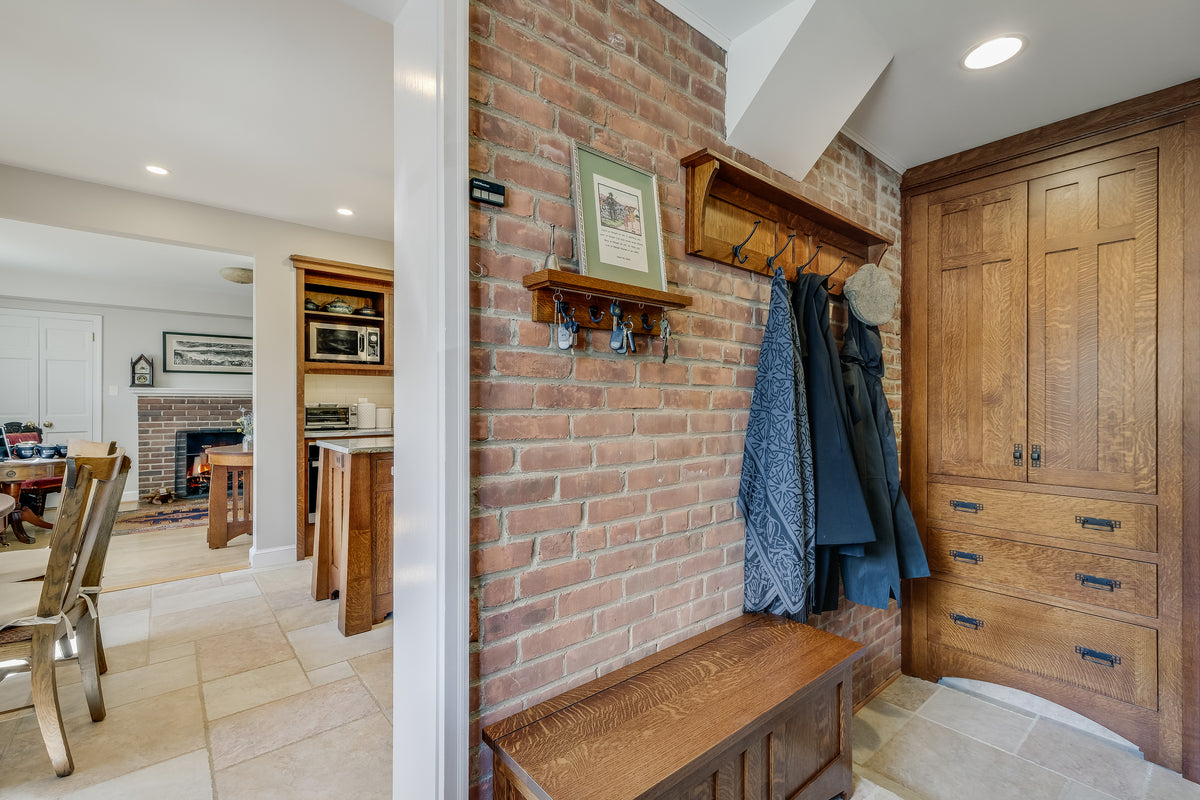
Storage and Built-Ins

Storage and Built-Ins

Cherry has been the built-in wood for two centuries, and the reason has not changed: it takes fine detail without the grain interrupting it. Raised panels, moldings, and beading all read cleanly on cherry because there is no open texture competing with the shape. Built-ins also tend to live in the rooms that get the least sun, which means a cherry library or media wall darkens slowly and evenly. Mudroom lockers, closet systems, window seats, and office built-ins all get built to the same spec as a kitchen, in the same finish, by the same shop.

How Cherry Looks and Changes

Cherry runs from a pale pinkish tan when freshly milled to a deep reddish brown after a few years in a room. The grain is fine and close, with a soft satin sheen when it is sanded well, and it often carries small dark flecks and gum pockets that are natural to the wood rather than faults in it.

Stain behaves differently on cherry than on most woods. Because the color is already there and still moving, a stain shifts the starting point rather than setting the final one. A light stain on cherry will not stay light, which is why the finishes that suit it best work with the darkening rather than against it.

Every Hardwood We Build In

The same craftsmen build in six other hardwoods, and no two put the same character into a room. See what each one brings.

Brown Maple
Brown Maple

The wood painted kitchens are built from, with almost no grain to show through the color.

Hickory

Hickory

The hardest wood we build in, with the most movement in the grain.

Hard Maple

Hard Maple

Harder than brown maple, and the palest wood we build in once it is finished clear.

Oak

Oak

Open grain and warm color, the wood most people picture when they picture a kitchen.

Golden Pecan-Quartersawn White Oak

Quartersawn Oak

Straight grain with ray fleck, cut the slow way for a craftsman kitchen.

Walnut

Walnut

Deep brown straight out of the tree, so it needs no stain at all.

Ready to Design Your Cherry Cabinets?

Cherry keeps deepening for years, so visit our Brentwood showroom and see where the color lands before you choose a finish. Or book a consultation, and we will plan the room with you. Our design team specs it, then our Amish and Mennonite craftsmen in Ohio and Indiana build it. We install across Nashville and ship nationwide.
Book a Consultation

Frequently Asked Questions

Cherry is an American hardwood cut from the black cherry tree, known for fine, close grain and a color that deepens with age. It starts a pale reddish tan and moves toward a deep warm brown, which is why it has been a furniture wood for centuries.
Yes, and that is the main reason people choose it. Cherry darkens through exposure to light, moving from a pale reddish tan toward a deep warm brown. The change comes from the wood itself rather than from a stain, and it never fully stops.
Most of the change happens in the first year, with the biggest shift in the first few months. After that it continues slowly for the life of the cabinets. A cherry kitchen at year five looks noticeably richer than it did the week it was installed.
Yes, particularly where you want the wood to be the feature. The grain is fine enough that raised panels and moldings read cleanly, and the color deepens rather than fades. It is softer than hickory or hard maple, so it marks more readily.
It can be done, but almost nobody does. Paint covers the color that makes cherry worth choosing, and there are woods built for exactly that job. If a painted kitchen is what you want, brown maple is the one to look at.
No. Cherry has been in continuous use in American cabinetry for two centuries, which is a longer run than any trend. What dates a kitchen is usually the door style and the hardware rather than the wood underneath them.
Cherry sits toward the upper end of the woods we build in, though the line you choose and the amount of detail in the doors usually move the price more than the species does. Book a consultation for a figure on your room.