Trusted by those who value real craftsmanship

Why Choose Rustic Cabinets?

Because you end up with a kitchen nobody else has. Lumber is graded, and the clear grades are the ones with the knots taken out, so a conventional run of doors is as close to identical as wood gets. Go the other way and every door is the only one of its kind, which is a thing veneer has never managed to fake.

It is also quietly harder to build. A clear door needs a board that passes. A rustic door needs somebody deciding which knot is sound enough to keep, which one gets filled, and where each board lands so the character spreads across the room instead of piling up on one cabinet. That judgment is the work.

The Lighter the Finish, the More You See 

Our Naturals range runs to 39 finishes, and they are the ones that let the wood speak loudest. A darker stain quiets the same board considerably. Order a $12 sample before you decide how much character you actually want in the room.
Order a sample 
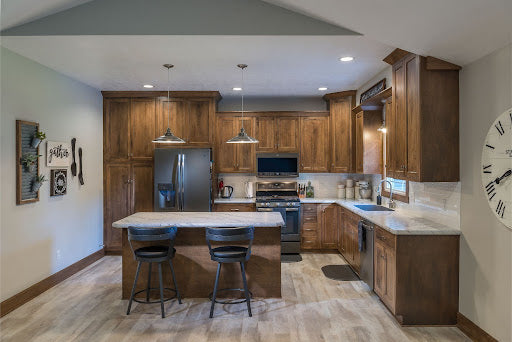
Kitchen Cabinets

Kitchen Cabinets

A kitchen is where rustic has to be composed rather than just ordered. Twenty doors come off a stack of boards that vary wildly, and if nobody is thinking about it, the three loudest ones end up side by side on the island while the run under the window turns out plain. So we lay a kitchen out on paper and then on the bench. Big character goes where you want the eye to land, the quieter boards carry the long runs, and the pantry door gets something worth opening the room with.

View more →
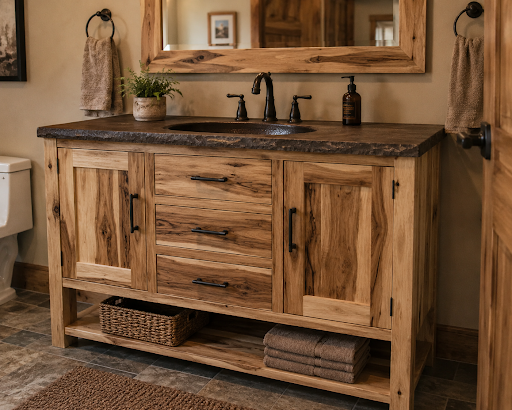
Bathroom Vanities

Bathroom Vanities

A vanity flips the problem. Two doors and a drawer bank means there is nowhere to spread anything, so instead of balancing a room you are choosing one piece of wood and building around it. That makes a bath the easiest place to try this. A single hickory front with a knot running through it does more for a powder room than any amount of tile, and if it turns out not to be for you, it is one cabinet rather than a kitchen.

View more →
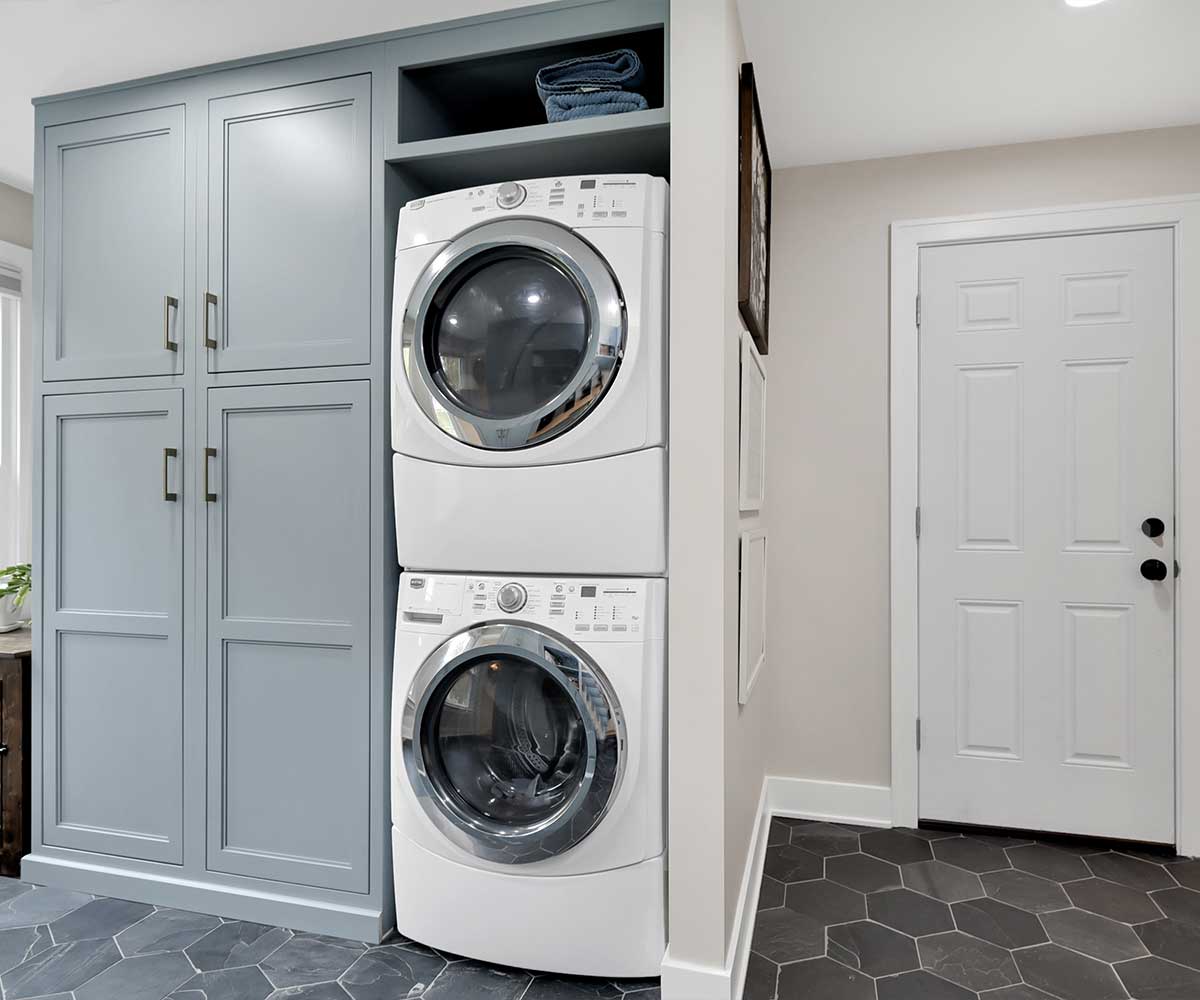
Laundry and Utility Cabinets

Laundry and Utility Cabinets

Utility rooms are where you can let it run loud. There is no dining table in the sightline and no sofa to argue with, so the boards with the most going on can all live in one place without anybody having to live with them at dinner. It is also the cheapest way to find out whether you like it. Build the laundry rustic, give it a year, and you will know exactly what you want to do with the kitchen. Most people come back wanting more of it, not less.

View more →
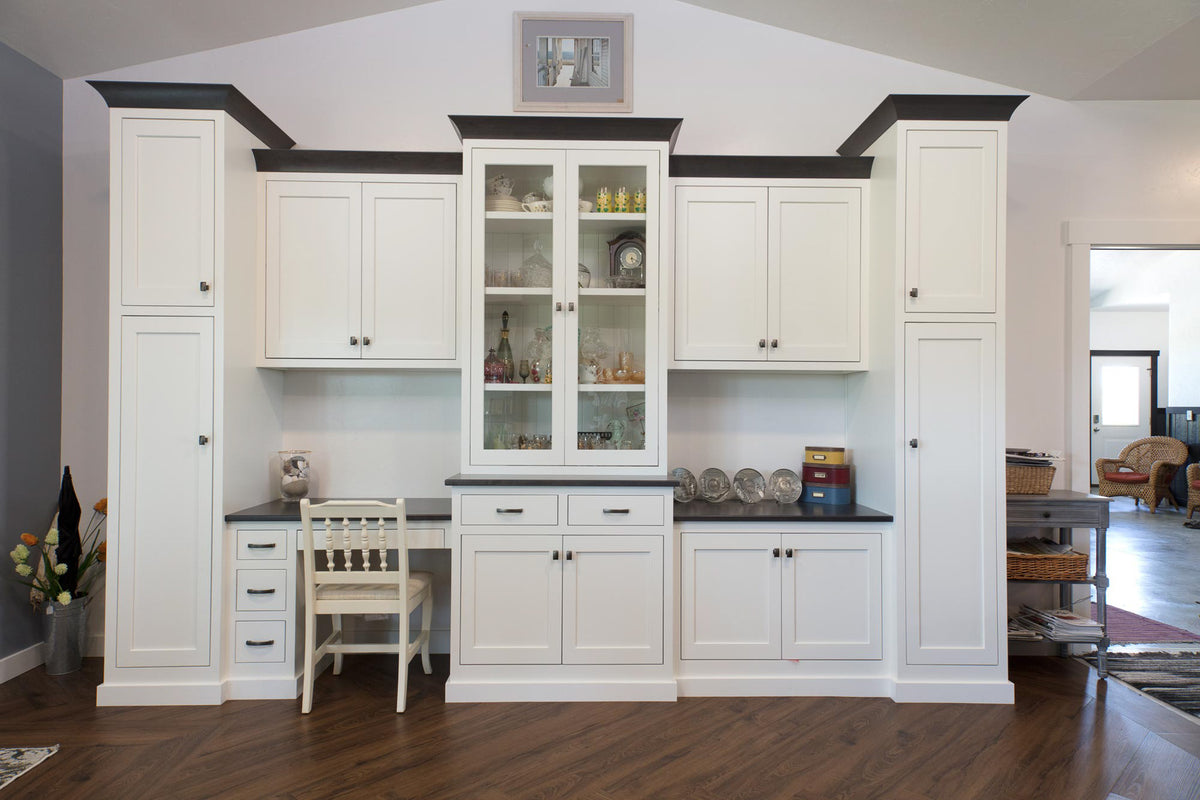
Storage and Built-Ins 

Storage and Built-Ins 

A built-in has to sit next to whatever the house already has. Wide board floors, a beam, a stone surround, none of which are new and none of which are even. A rustic front is the one that joins that company without looking like it arrived last week. Shelving works the same way. Open runs in a character grade read as part of the room rather than as storage bolted to a wall, which is usually the whole point of building something in.

View more →

 How We Pick the Boards

Not every mark survives. A tight knot with sound wood around it stays and becomes the reason the door is interesting. A loose one, or one with a crack running out of it, either gets filled and stabilized or the board gets cut so the knot lands in offcut. Nothing goes into a door that is going to move later.

Then it becomes a layout job. Boards get sorted light to dark, matched into doors so the two halves of a panel agree with each other, and distributed so no single cabinet carries all the drama. Hickory gives you the widest swing to work with. Oak and quarter sawn white oak are steadier if you want character without a scene.

 Every Cabinet Style We Build

There are two choices here and they are independent. The first four below set how much of the frame stays in view once the doors shut. The six after set the shape of the door, and a rustic grade can go into any shape on either list.  

Euro Cabinets

No frame on the box, and doors covering the carcass end to end. 

 Inset Cabinets 

Doors cut one by one and set level inside their own openings.

Face Frame Cabinets  

 Hardwood across the front of the box, and what the next two sit on. 

 Partial Overlay Cabinets 

Half an inch of door over the frame, with the rest left showing. 

Full Overlay Cabinets 

Doors taken almost to the frame edges, with a hairline between them.

 Shaker Cabinets 

Two stiles, two rails and a flat panel, and nothing else at all. 

 Farmhouse Cabinets

Sturdy, informal fronts for a room that gets used every day. 

 Raised Panel Cabinets

 A center panel standing above its frame, with a bevel cut between. 

 Traditional Cabinets 

Older American profiles, heavier proportions, more worked detail.

 French Cabinets 

Carved rails and soft curves, for woodwork that expects to be looked at. 

Ready to Plan Your Rustic Cabinets?

No photograph has ever settled how much character somebody wants. Stand in front of a few doors at our Brentwood showroom and you will know within a minute. Too far? A call works. Built by Amish and Mennonite craftsmen in Ohio and Indiana, fitted near Nashville, shipped anywhere else.
Book a Consultation

Frequently Asked Questions

Cabinets built from a character grade of hardwood, meaning boards with knots, mineral streaks and strong color variation are kept rather than sorted out. The door style can be anything. Rustic describes the wood going into it, not the shape of the front.
No. It is a different grade, not a lesser one, and the same solid hardwood either way. Clear grades are sorted for uniformity, character grades for interest. The second needs more sorting and more thought at layout, which is why the work is not cheaper.
Hickory gives the widest color swing of anything we build in, often from near white to deep brown inside one door. Oak and quarter sawn white oak sit in the middle, with texture and some character but a calmer overall range. Cherry and walnut show the least.
Not the ones we use. Tight knots with sound wood around them go into doors; loose ones are filled and stabilized or cut out at the bench. The panel also floats in its frame, so seasonal movement is taken up by the door rather than forced through a knot.
They can, though paint covers the grain and color that you are paying for in the first place. If a painted kitchen is what you want, brown maple is the species we would point you to. Most rustic kitchens take a light stain or one of our natural finishes instead.
Two to three weeks for stock, four to eight for semi-custom, eight to twelve for fully custom once drawings are signed off. Board selection happens inside that window rather than on top of it, so the grade itself does not add time.
Species, finish, the construction you pick and how many boxes fall outside standard sizes. The character grade is not a discount and not a premium on its own. Board selection is part of the build rather than a line on the quote. We work the number out once the layout exists.