Trusted by those who value real craftsmanship

Why Choose Shaker Cabinets?

Because a plain door lets the rest of the room talk. A marble counter, a copper range hood, a wall of hand glazed tile: all of it has to share the kitchen with the cabinetry, and a square frame around a flat panel is the only front that will not argue back. That restraint is also why the same door looks right in a 1920s bungalow and a new build.

It is the least forgiving door we make, which is the other half of the reason to choose it. A profiled door buries a loose joint under an inch of molding. On a shaker there is nowhere for a gap to go, so the corner where the rail meets the stile is the whole thing, and it stays visible for as long as you own the kitchen.

The Panel Is Where the Grain Shows

A shaker frame puts a rectangle around a piece of flat wood and leaves it there. Whatever the grain does, you will be looking at it for years. Order a $12 sample in the species you are leaning toward and see what you would actually be framing.
Order a sample 
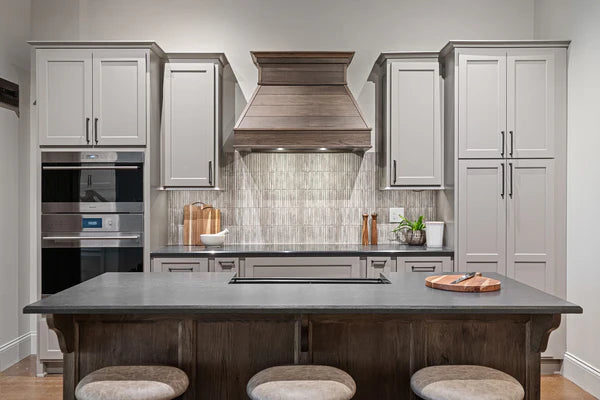
Kitchen Cabinets

Kitchen Cabinets

Kitchens get changed around their cabinets. Counters get replaced, backsplashes come and go, a range gets upgraded and the hardware follows it, and every one of those decisions is easier when the doors are not making a statement of their own. Shaker survives all of it without looking dated between renovations. The place to watch is the inside corner of the frame. That square inch takes a fingernail every time a door is pulled without hardware, and because we build in solid hardwood rather than a wrapped panel, a worn corner can be sanded back and refinished instead of replaced.

View more →
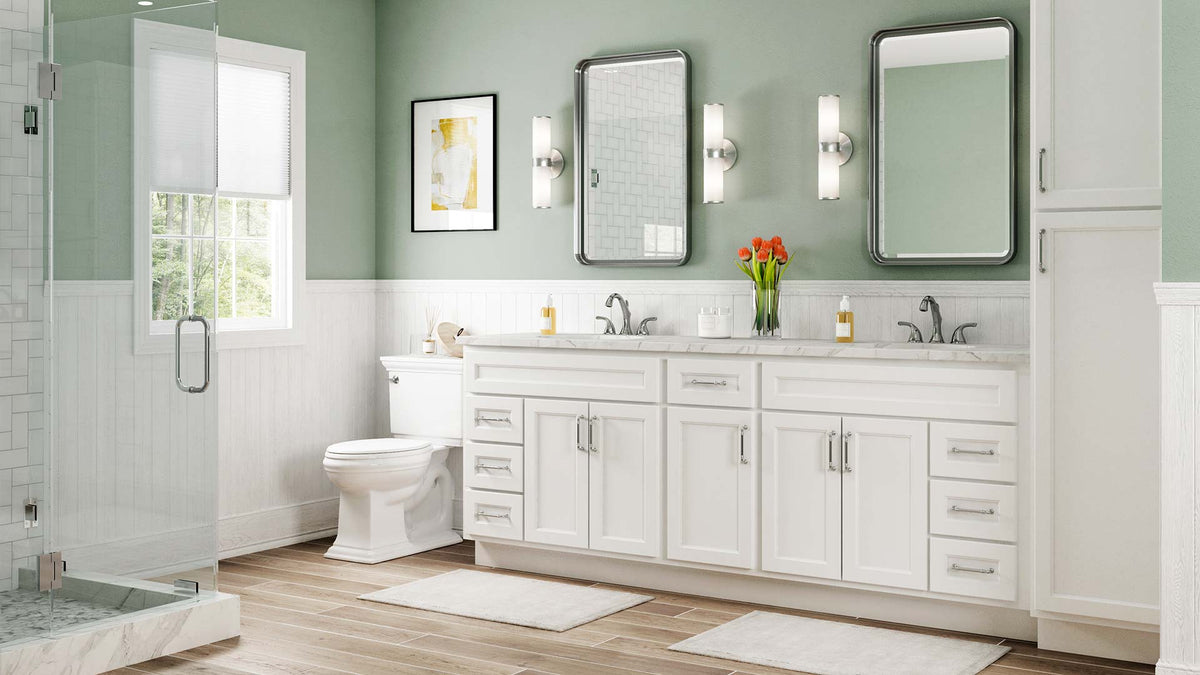
Bathroom Vanities

Bathroom Vanities

Scale determines a shaker vanity. Rails sized for a thirty-inch kitchen door look heavy on a sixteen-inch vanity door, and the panel that is left in the middle ends up small enough to look like an afterthought. Slim shaker exists for exactly this, with narrower rails that keep the proportion honest on a small front. Humidity is the second thing. The panel in a shaker door floats in its groove rather than being glued in place, so it can swell and shrink through the year without splitting the frame around it. Hold the room between thirty and fifty percent and nothing moves enough to notice.

View more →
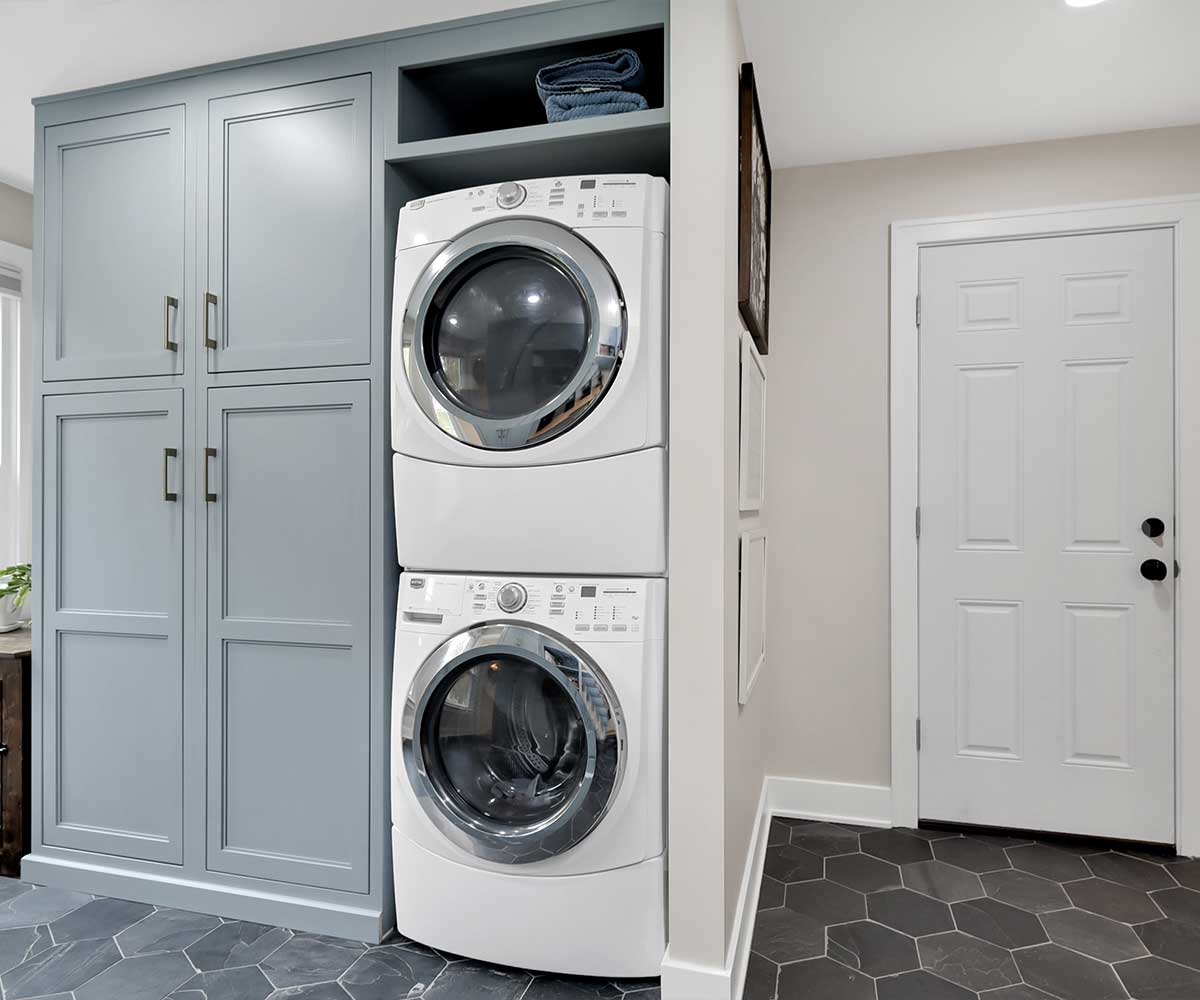
Laundry and Utility Cabinets

Laundry and Utility Cabinets

Paint sits better on a shaker door than on almost anything else we build. There are four inside corners and a flat field, so color goes on evenly and dries without pooling anywhere, which is what you want on the long white runs that laundry rooms usually get. It is also a room full of hard objects. Baskets, bottles, a vacuum that lives in the tall cupboard, and no decoration on the door to chip. A dent on a flat panel is a repair. A dent in a carved edge is a replacement.

View more →
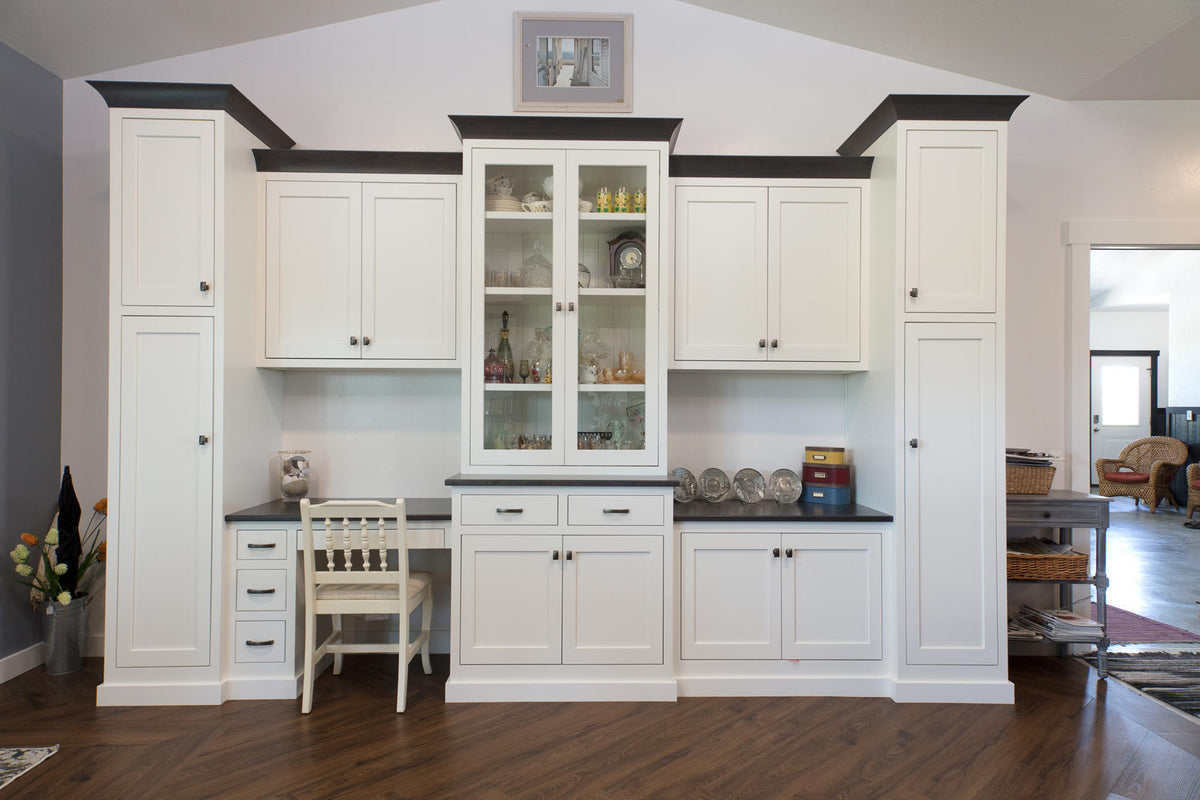
Storage and Built-Ins 

Storage and Built-Ins 

Shaker is the one door style that matches trim already in the house. Square edged casings and plain baseboards came out of the same thinking, so a built-in with shaker fronts lines up with a Craftsman doorway or a simple colonial architrave instead of sitting beside it. That makes it the safe choice for a piece that has to join something existing. A library wall, a mudroom bank or a window seat can be built to the proportions of the room it goes into, and the door will not date the rest of the house around it.

View more →

 How a Shaker Door Is Made

Four frame pieces and a panel. The stiles run top to bottom, the rails run across between them, and each joint is cut so that end grain never shows on the face. The panel is milled thinner at its edges and dropped into a groove cut around the inside of the frame, where it sits loose rather than glued.

That loose panel is the reason these doors last. Hardwood moves across the grain with the seasons, and a panel free to move in its groove takes up that movement without pushing the frame apart. Everything else about the door is a decision: rail width, inside edge, whether the panel sits flush or set back.

 Every Cabinet Style We Build

 Two decisions, taken separately. The first four below set how much of the frame you see once the doors are shut. The six after them set the shape of the door itself, and shaker goes with any of the four above it.  

Euro Cabinets

A box built with no frame at all, and doors that cover it completely. 

 Inset Cabinets 

Each door cut to its opening and set level with the frame around it. 

 Face Frame Cabinets  

Hardwood across the front of the box, and the base of the two below. 

 Partial Overlay Cabinets 

A half inch of door over the frame, and the rest of the wood on show. 

Full Overlay Cabinets 

Doors run almost to the frame edges, leaving a hairline between them. 

 Farmhouse Cabinets 

Plain, hard-wearing fronts for a kitchen that gets properly used. 

 Raised Panel Cabinets 

A center panel lifted above its frame, so the door carries light and shade.

 Rustic Cabinets 

Wood picked for knots and color rather than sorted to match. 

 Traditional Cabinets 

Older American profiles, with worked edges and heavier proportions. 

 French Cabinets 

Curved rails and carving, for a room that wants decorated woodwork. 

Ready to Plan Your Shaker Cabinets?

Run a finger along a joint in our Brentwood showroom and you will know in a second whether it was made properly. Too far? Book a call. Our designers draw the room, Amish and Mennonite craftsmen in Ohio and Indiana cut it, and we install near Nashville or ship.
Book a Consultation

Frequently Asked Questions

Shaker cabinets take their name from a five piece door: two vertical stiles, two horizontal rails and a flat panel held in a groove between them. No carving, no applied molding, and a square inside edge where the frame meets the panel.
Rail and stile width. A standard shaker frame is around two and a quarter inches, slim shaker is noticeably narrower, and the narrower frame leaves more panel showing. Slim suits small doors and modern rooms, standard suits larger doors and older houses.
They have been in use since the early 1800s and have outlasted every kitchen trend since, largely because the door has no decoration to date. What ages a shaker kitchen is usually the color, the hardware or the counter, and all three are replaceable.
Brown maple if the doors are being painted, because the grain stays quiet under color. Oak, hickory or quarter sawn white oak if they are being stained, since the flat panel gives the grain a clear field. Cherry and walnut suit a room where the wood is the point.
Yes. Door shape and construction are separate choices, so the same shaker front can sit inside the frame, lap over part of it, cover almost all of it, or go on a frameless box. Our design team will walk you through what each one does to the look.
Two to three weeks for stock, four to eight for semi-custom, and eight to twelve for fully custom once drawings are approved. Shaker adds nothing to that, since there is no profile to run and no carving to cut on these doors.
Species, finish, the construction you choose and how many boxes sit outside standard widths. Painted work costs more than stained, because paint needs more preparation on a flat panel. Ask us to quote the layout, since the figure is built from the cabinet count up.