Trusted by those who value real craftsmanship

Why Choose Hickory Cabinets?

You choose hickory when the kitchen takes a beating, and you want it to look like that was the plan. It is the hardest domestic hardwood we build in, harder than maple or oak, which means it resists the dents that come from real use rather than absorbing them.

The second reason is the grain. Hickory swings from pale cream to dark reddish brown, sometimes across a single door, and that variation is the point rather than something to be graded out. A hickory kitchen has movement in it that a uniform wood cannot produce. Hickory is chosen for that variation, not in spite of it, so a run of doors reads as a set rather than a repeat.

Hickory in Your Own Light

We build hickory in 46 finishes, and the same one lands differently on the pale grain than on the dark. Samples are $12 and we ship anywhere in the country, so you see the finish on hickory, in your own light, before we build a thing.
Order a sample
Kitchen Cabinets

Kitchen Cabinets

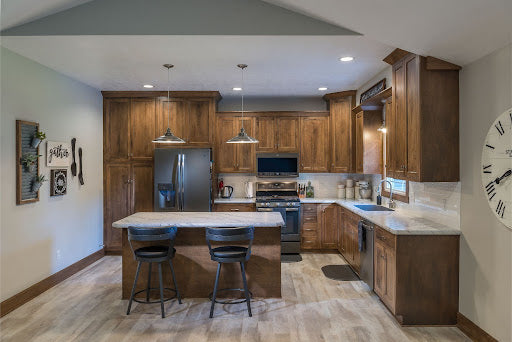
Hickory is the wood people ask for when the kitchen is the busiest room in the house. It goes into houses where the cabinets get opened a few hundred times a week, and nobody is being careful, and hickory absorbs that better than anything else we build in. Door style does more work here than on most woods.Because hickory already brings movement in the grain, a simple door like shaker lets that variation be the feature, while a heavily detailed door competes with it. If you want hickory in a formal kitchen, keep the door quiet and let the wood do the talking.

View more →
Bathroom Vanities

Bathroom Vanities

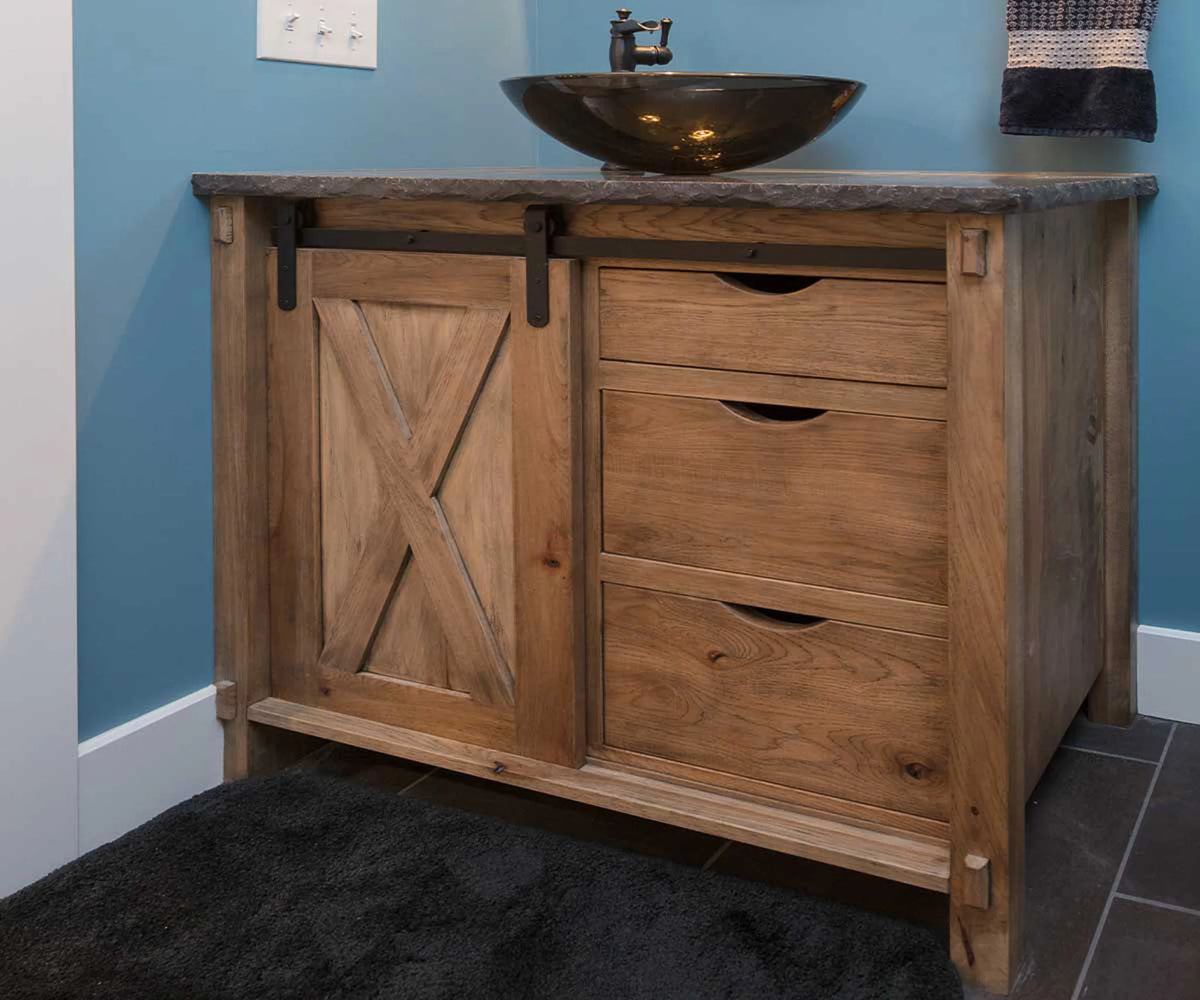
Hickory holds up well in a bathroom because dense wood takes on moisture more slowly than open-grained wood does. A sealed hickory vanity stays stable despite the steam and temperature changes that are common in bathrooms. Hickory's color range reads bolder in a small room than across a full kitchen, because there is less cabinet to spread the variation over. Hickory's color range reads bolder in a small room than across a full kitchen, because there is less cabinet to spread the variation over. In a powder room, that can be exactly the effect you want. We build hickory vanities from narrow widths through full double vanities, sized to your plumbing.

View more →
Laundry and Utility Cabinets

Laundry and Utility Cabinets

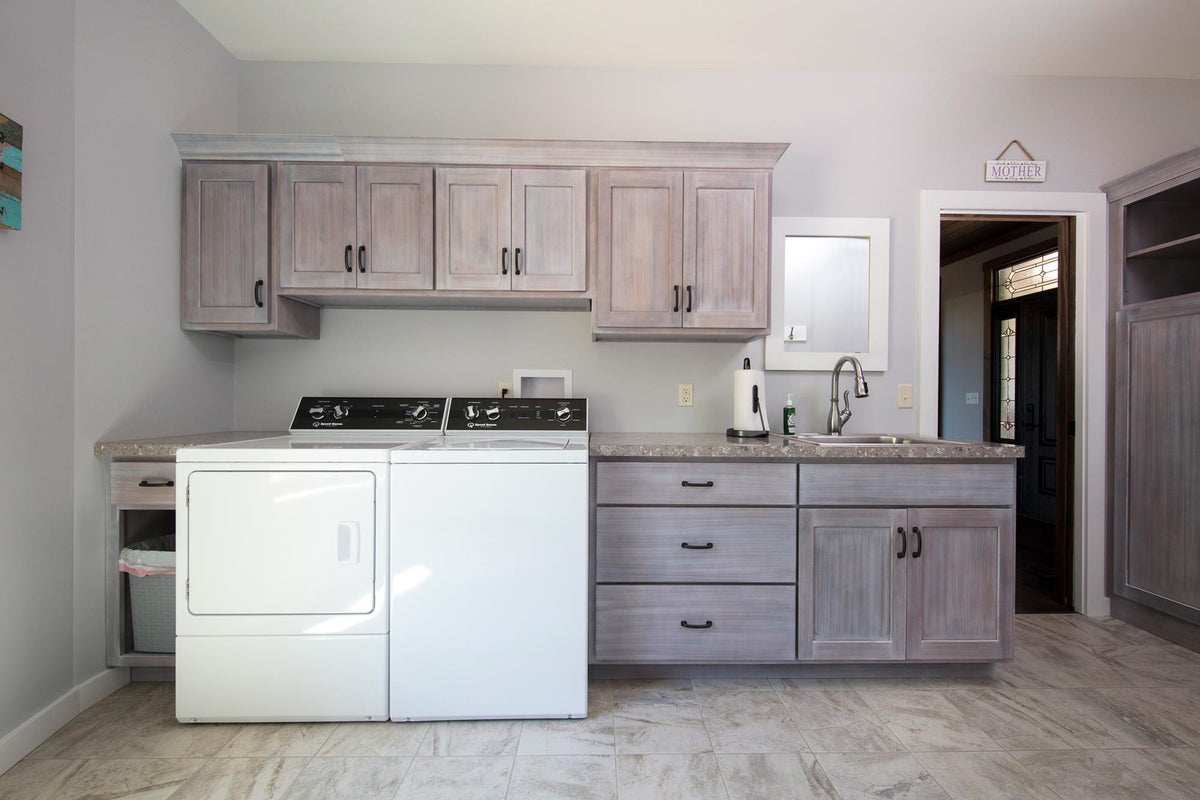
Mudrooms and laundries are where hickory's hardness stops being a specification and starts being something you notice. These are the rooms that take the most abuse in a house, and hickory is the wood least bothered by it. Baskets, boots, and the corner of a washing machine all leave marks on softer cabinets. Hickory takes the same treatment and shows less for it, and what it does show tends to disappear into grain that was already varied. We build base and tall cabinets, folding counters, sink surrounds, lockers and bench seating in hickory, finished to match the rest of the house.

View more →
Storage and Built-Ins

Storage and Built-Ins

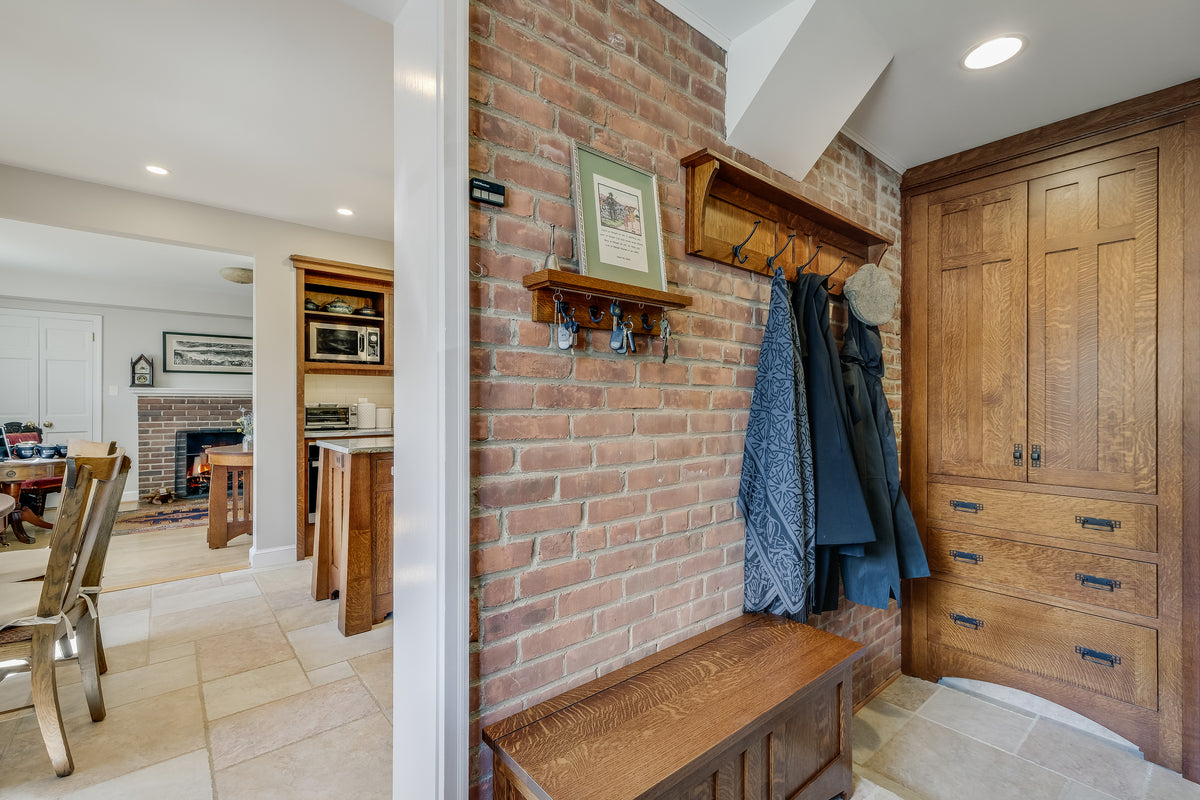
Hickory built-ins go where the furniture has to survive something. Mudroom lockers that take wet coats and dropped bags, garage and workshop cabinetry, shelving that will hold more weight than shelving should. The same hardness that makes it a good kitchen wood makes it a good shelf. Hickory sags less over a long span than softer woods do, which matters on a bookshelf or a media wall more than most people expect. Closet systems, window seats and office built-ins all get built to the same spec as a kitchen, in the same finish, by the same shop.

How Hickory Looks and Wears

Hickory runs from a pale cream sapwood to a deep reddish brown heartwood, and a single board often carries both. The grain is strong and irregular, with sweeping lines rather than the straight, even pattern of maple, and knots are common enough that a knotty grade is sold as its own thing.

Finish changes how much of that you see. A light or natural finish leaves the full contrast visible, which is what most people are after when they ask for hickory. A dark stain narrows the gap between the pale and dark areas without erasing it, so the wood still reads as hickory rather than as something uniform.

Every Hardwood We Build In

The same craftsmen build in six other hardwoods, and no two put the same character into a room. See what each one brings.

Brown Maple
Brown Maple

The wood painted kitchens are built from, with almost no grain to show through the color.

Cherry
Cherry

Starts light and darkens for years, so the color comes from the wood rather than a stain.

Hard Maple

Hard Maple

Harder than brown maple, and the palest wood we build in once it is finished clear.

Oak

Oak

Open grain and warm color, the wood most people picture when they picture a kitchen.

Golden Pecan-Quartersawn White Oak

Quartersawn Oak

Straight grain with ray fleck, cut the slow way for a craftsman kitchen.

Walnut

Walnut

Deep brown straight out of the tree, so it needs no stain at all.

Ready to Design Your Hickory Cabinets?

Hickory changes from board to board. Come and stand in front of full doors at our Brentwood showroom, or start with a consultation and we will work the layout out together. Our designers draw it up then our Amish and Mennonite craftsmen in Ohio and Indiana build it. Installation available around Nashvilleshipping nationwide.
Book a Consultation

Frequently Asked Questions

Hickory is a North American hardwood and the hardest species commonly used for cabinetry. It is known for a wide color range within a single board, from pale cream sapwood to reddish-brown heartwood, and for a strong, irregular grain.
Yes, particularly in kitchens that get heavy use. Hickory resists dents better than any other wood we build in, and its color variation hides everyday marks well. If you want every door to match closely, a more uniform wood suits that better.
Hickory is meaningfully harder than hard maple, oak, cherry, or walnut, which are some of the other species we build in. In practice, that means it takes a harder knock before it marks, which is why it turns up in family kitchens and mudrooms.
Because hickory trees produce pale sapwood and dark reddish heartwood, and cabinet-grade hickory uses both. A single door can carry the full range. That contrast is the reason most people choose hickory rather than something that needs to be corrected.
Yes, but it is an unusual choice. Paint covers the grain and color variation hickory is chosen for, and you would be paying for hardness you cannot see. If you want a painted kitchen, brown maple is the wood built for it.
No. Hickory has been used in American cabinetry and furniture for generations, and its appeal has never depended on a trend. What dates a kitchen is usually the door style and hardware rather than the species underneath.
Hickory is priced with the other domestic hardwoods we build in, and the line you choose and the amount of detail in the doors usually move the figure more than the species does. Book a consultation for a number on your room.