Trusted by those who value real craftsmanship

Why Choose Hard Maple Cabinets?

You choose hard maple when you want the cabinets to sit quietly. There is very little figure in the wood, so a long run of doors reads as one surface instead of a series of different boards, and the door style and the hardware are what the eye lands on.

The second reason is hardness. It is the same wood used for bowling lanes and basketball floors, and of the seven we build in, only hickory is harder. A closed grain on top of that means a finish lies flat on the surface rather than settling into open pores, so the color you pick is the color that shows.

The Finish Is the Whole Decision

On a wood this quiet, the finish is what you are actually choosing. The same stain reads differently on hard maple than on an open-grained wood, and that difference does not survive a product photo. Samples are $12 and we ship anywhere in the country.
Order a sample
Kitchen Cabinets

Kitchen Cabinets

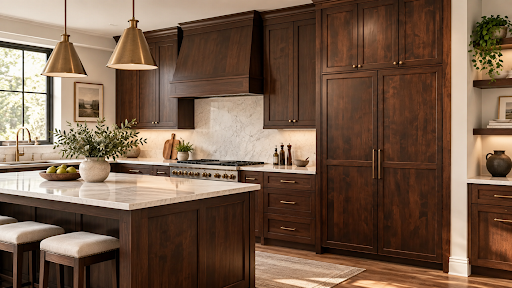
Hard maple suits a kitchen where the cabinetry is meant to be the background. It holds a light finish without any grain pattern breaking it up, which is why it turns up in rooms designed around daylight and plain surfaces. That evenness leaves room for detail elsewhere. A raised panel, a beaded frame or a glass door all read clearly on hard maple, because nothing in the wood is competing with them. Where a strongly figured wood asks for a plain door, hard maple will carry a detailed one.

View more →
Bathroom Vanities

Bathroom Vanities

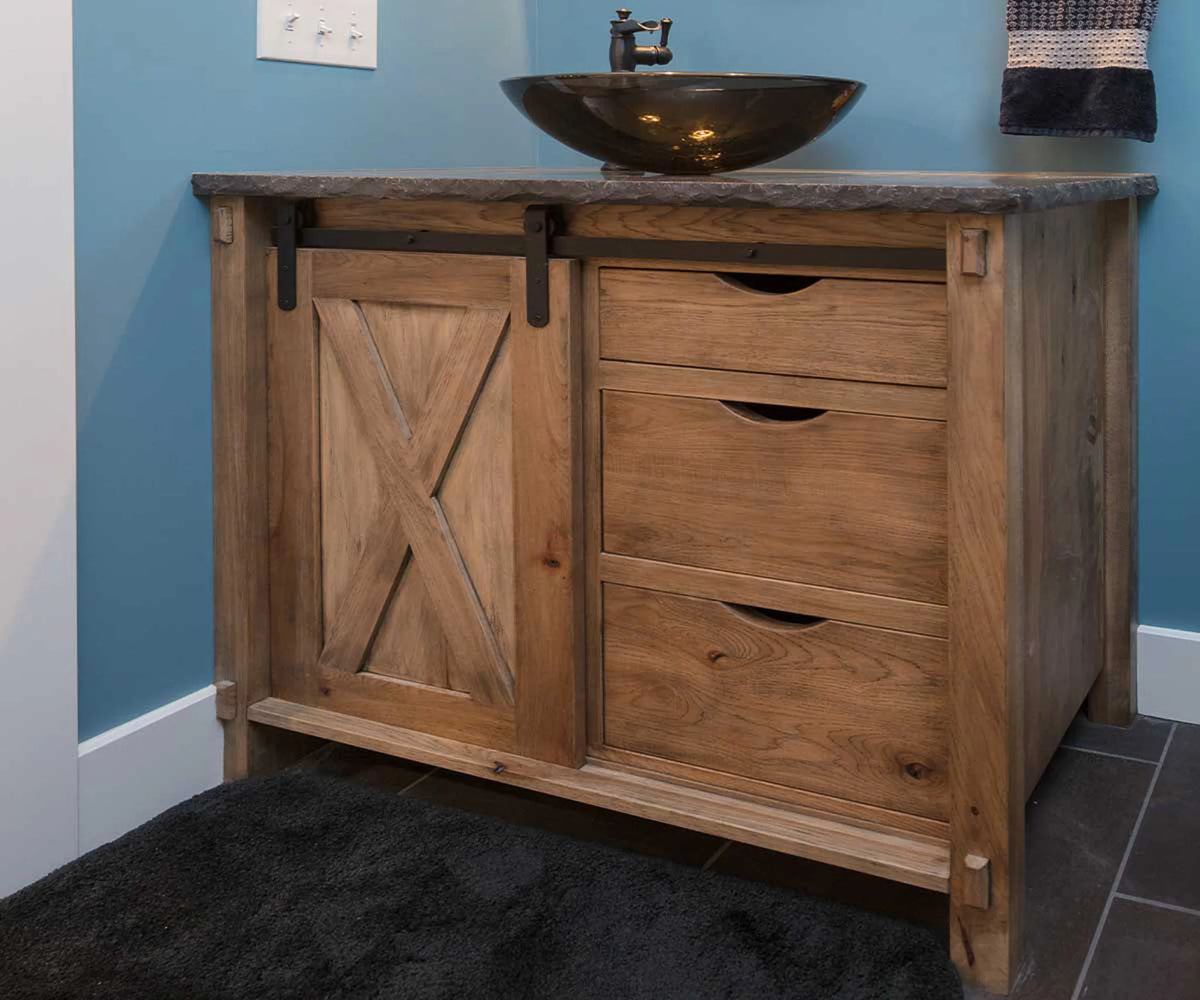
A hard maple vanity works in a small bathroom because pale cabinetry gives back some of the light a windowless room never had. The color stays consistent from the drawer fronts to the side panels, which matters at arm's length more than it does across a kitchen. The closed grain leaves a tight surface that wipes down without catching in open pores, which is worth something in a room that deals with toothpaste and hairspray. We build hard maple vanities from narrow single widths through full doubles, sized to your plumbing.

View more →
Laundry and Utility Cabinets

Laundry and Utility Cabinets

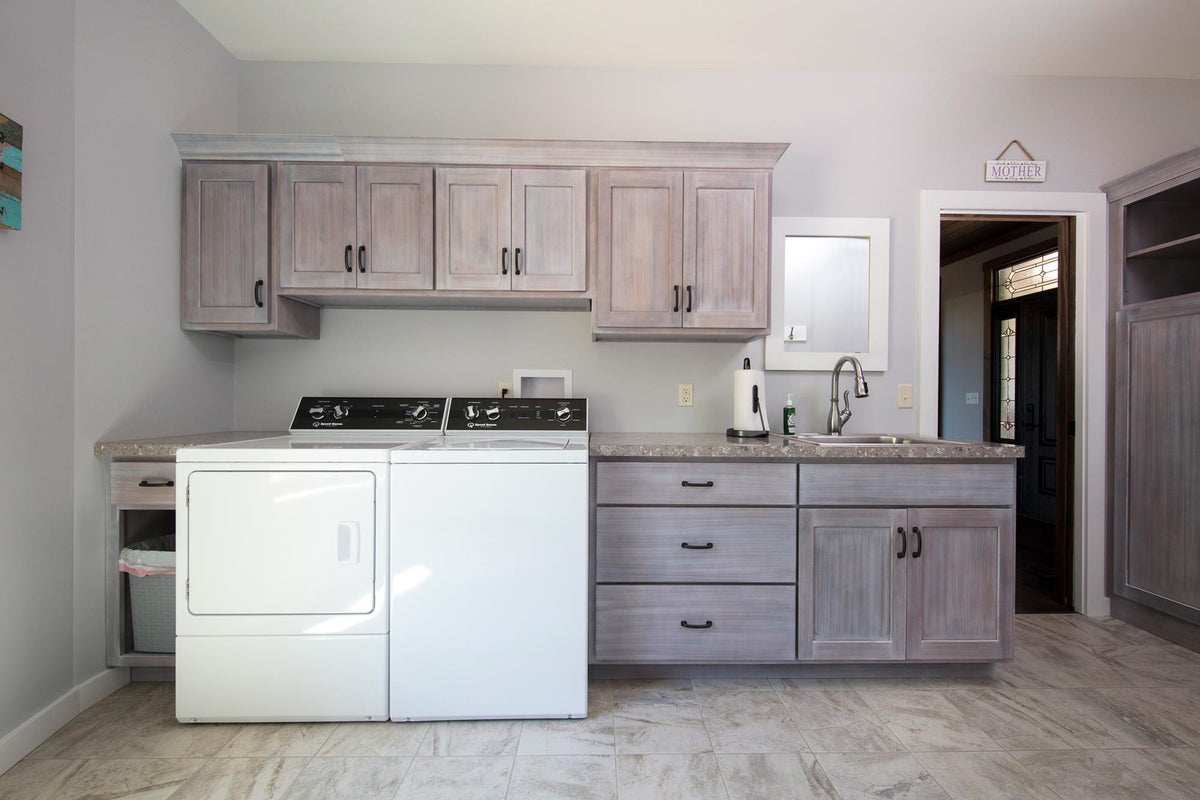
Laundry and mudrooms rarely get much daylight, and a pale cabinet gives some of it back. Hard maple reflects rather than absorbs, so a room lit by one fixture stops feeling like a corridor. It is dense enough for the way these rooms get treated. Baskets, boots, and the corner of a machine all land on the same cabinet, and a closed-grain hardwood takes that better than a softer one. We build the whole room in hard maple: base and tall cabinets, folding counters, sink surrounds, lockers and bench seating.

View more →
Storage and Built-Ins

Storage and Built-Ins

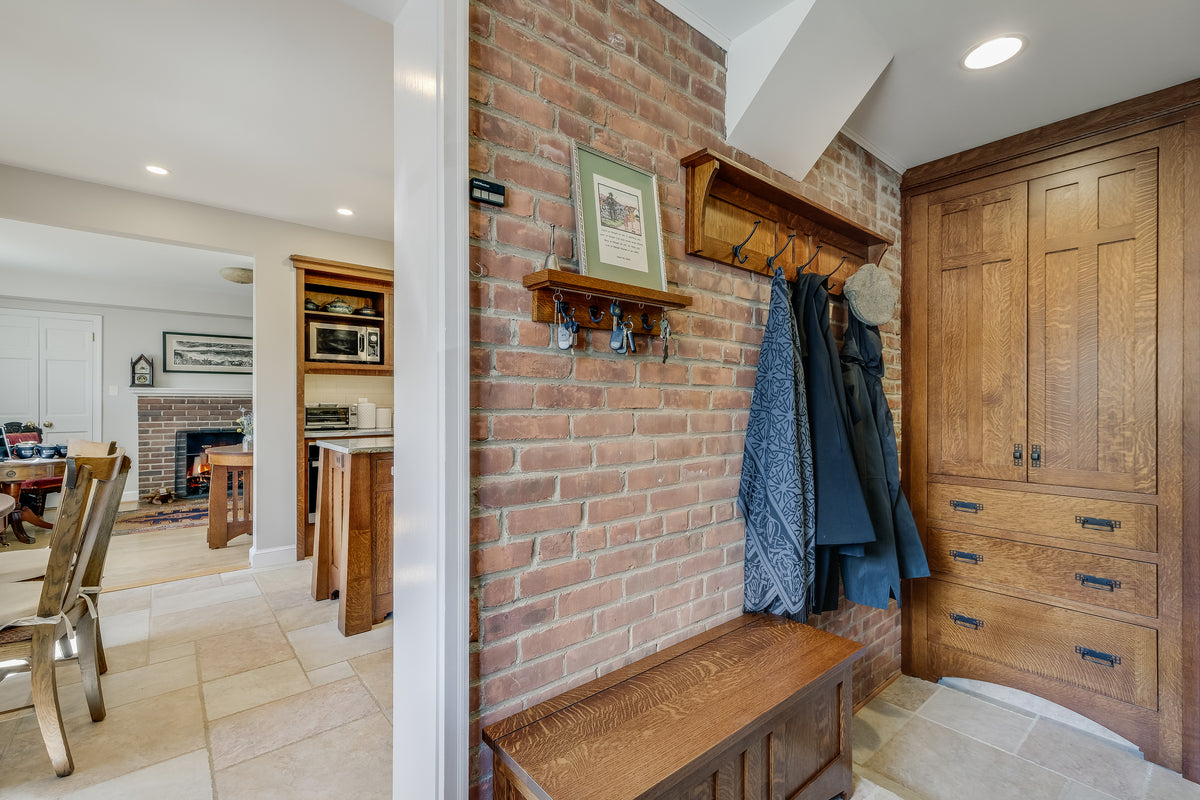
Hard maple is the wood to use when built-ins have to line up with everything else in the room. Doors, shelving and face frames all take the same finish evenly, so a wall of storage reads as one piece rather than as furniture pushed against a wall. It also machines cleanly, which shows on the parts of a built-in people look at closely: glass frames, fluting, shelf edges. Closet systems, window seats, media walls and office built-ins are all built to kitchen spec and finished to match the rest of the house.

How Hard Maple Looks and Wears 

Hard maple runs from near white to a pale cream, with occasional fine brown mineral streaks and a grain so tight it is easier to feel than to see. The figure is subtle, mostly straight, with the odd soft curl in a board.

Over the years, a clear-finished hard maple kitchen ambers slightly, moving from white toward cream, then settles. It is a shift you notice in old photographs rather than day to day. Under a stain, the pale background does the opposite: the color you chose is the color that stays.

Every Hardwood We Build In

Hard maple is the quietest grain of the seven hardwoods we build in. The other six each put something different into a room. See them built.

Brown Maple
Brown Maple

The wood painted kitchens are built from, with almost no grain to show through the color.

Cherry
Cherry

Starts light and darkens for years, so the color comes from the wood rather than a stain.

Hickory
Hickory

The hardest wood we build in, with a color range that can swing across a single door.

Oak

Oak

Open grain and warm color, the wood most people picture when they picture a kitchen.

Golden Pecan-Quartersawn White Oak

Quartersawn Oak

Straight grain with ray fleck, cut the slow way for a craftsman kitchen.

Walnut

Walnut

Deep brown straight out of the tree, so it needs no stain at all.

Ready to Design Your Hard Maple Cabinets?

Send us your measurements and the finish you are leaning toward, and a design specialist will tell you how hard maple will sit in the room. If you would rather see it firsthand, our Brentwood showroom has it on full doors. Built by our Amish and Mennonite craftsmen in Ohio and Indiana, our cabinets are installed throughout Nashville and shipped nationwide.
Book a Consultation

Frequently Asked Questions

Hard maple, also called sugar maple, is a North American hardwood used for cabinetry, flooring, and butcher block. Cabinet-grade hard maple comes from the pale sapwood, which is why it runs near white, with a tight closed grain and very little figure.
Yes. It is dense enough for daily use and even enough that a long run of doors matches. The closed grain means a finish sits flat rather than settling into open pores, so the color holds consistent from one end of the room to the other.
They come from different parts of different maple trees. Hard maple is the pale, dense sapwood, which suits clear coats and stains. Brown maple is the softer heartwood with almost no visible grain, and that is what makes it the standard for painted kitchens.
They warm slightly. Under a clear finish, hard maple ambers from near white toward cream over several years and then settles. Stained hard maple holds its color, because the stain rather than the bare wood is doing most of the work.
Yes. We finish hard maple in 31 colors, including deep browns and near blacks such as Ebony, Onyx and Carbon. Because the grain is closed, dark colors sit evenly across the surface instead of gathering in open pores.
Species is rarely the deciding factor. What moves the number is the line you build in, the size of the room, and how much detail the doors carry. A consultation gets you a figure for your own layout rather than a range.
It depends on the line. Stock is ready in 2 to 3 weeks, semi-custom runs 4 to 8 weeks, and a fully custom build takes 8 to 12 weeks.