Trusted by those who value real craftsmanship

Why Choose Oak Cabinets?

You choose oak for the grain. The wood grows in visible bands, so a plain-sawn board comes out carrying the wide cathedral arches that everyone recognizes as oak. Whatever door style sits on top of that, the pattern is still the first thing anyone sees.

The wood is familiar, but what you do with it does not have to be. Oak is one of the harder species we build in, and we finish it 65 different ways, from clear coats that keep it pale through greys and weathered tones to near blacks. That range is the difference between an oak kitchen that looks like 1995 and one that looks like it was specified last month.

Hold It Against What You Already Have

Most houses with oak have oak somewhere else: trim, doors, a floor. A finish that looks right on screen can sit a shade off next to the real thing. Samples are $12 and go out to any address in the country.
Order a sample
Kitchen Cabinets

Kitchen Cabinets

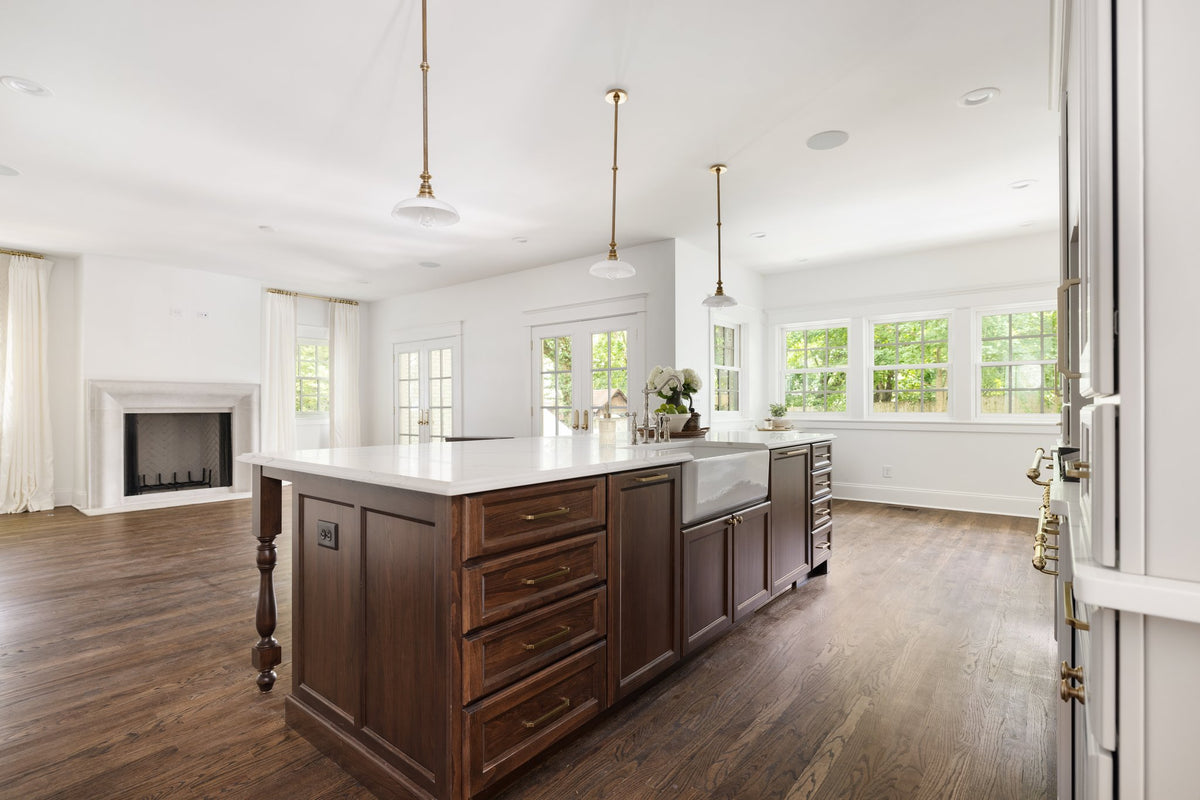
An oak kitchen announces itself as wood. Whatever color goes on top, the figure still reads from across the room, and for most people that is the whole reason for choosing it. Door style is where the rest gets decided. Mission, raised panel and traditional profiles all suit a strongly figured wood, and those are the doors oak turns up on most often. A flat slab works too, though on oak it reads as a statement about the grain rather than as a plain door.

View more →
Bathroom Vanities

Bathroom Vanities

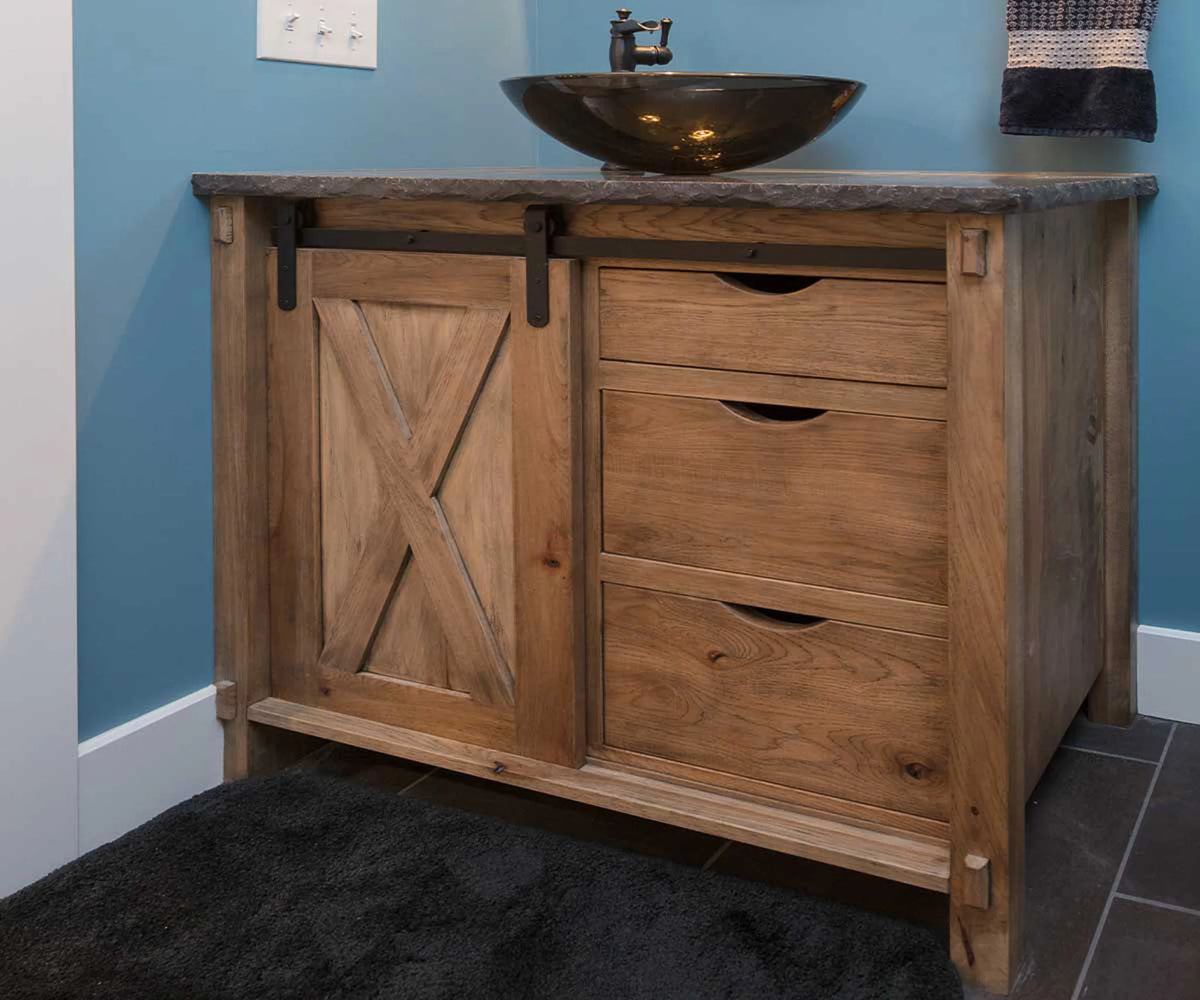
A bathroom is mostly hard surfaces. Tile, glass and stone all reflect, and an oak vanity is usually the one thing in the room that absorbs light, which is what keeps it from feeling clinical. Oak's open grain needs a properly sealed finish, and that is how every vanity we build is finished. We make oak vanities from powder room widths through full doubles, sized to your plumbing rather than to a standard box.

View more →
Laundry and Utility Cabinets

Laundry and Utility Cabinets

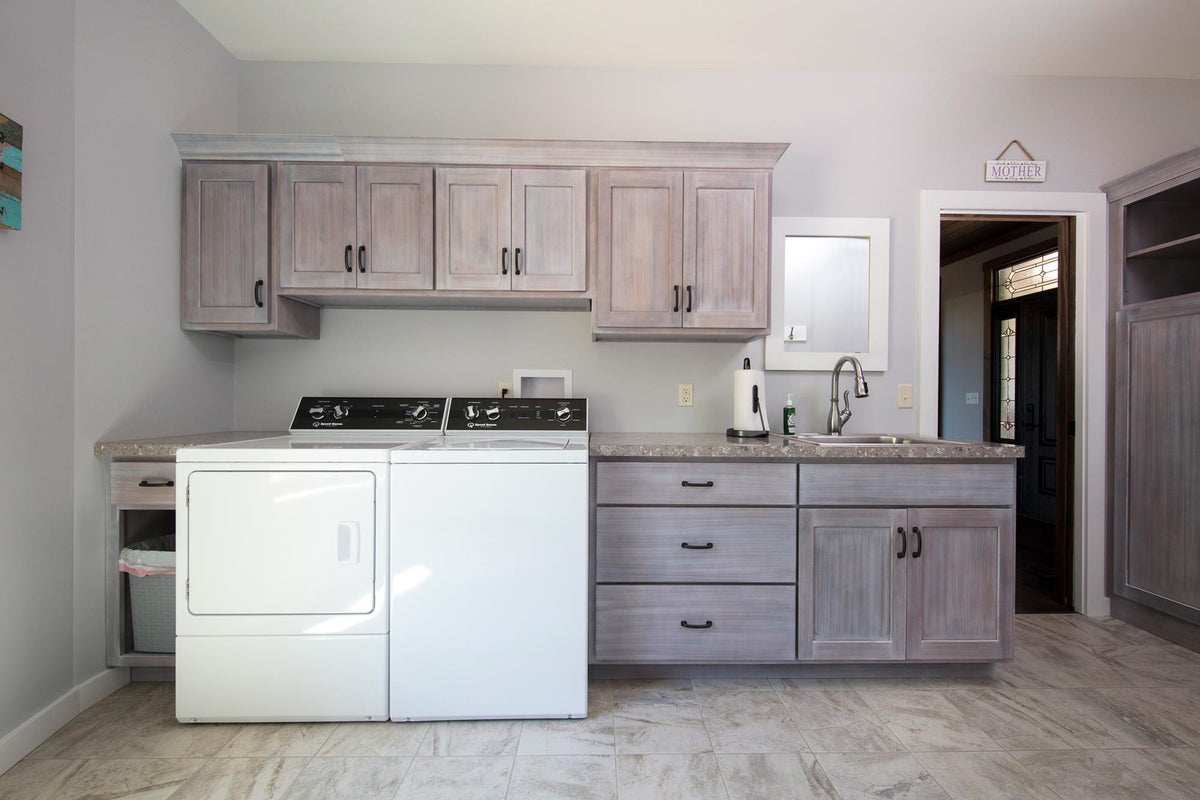
Oak earns its place in a laundry room the same way it does in a hallway floor. It takes knocks without recording every one of them, because a scuff lands on a surface that already has texture rather than on a smooth one. We build base and tall cabinets, folding counters, sink surrounds and hanging space in oak, finished to match whatever is already in the room. If that room opens onto an oak kitchen or an oak hallway, how closely it matches is a finish question rather than a wood one.

View more →
Storage and Built-Ins

Storage and Built-Ins

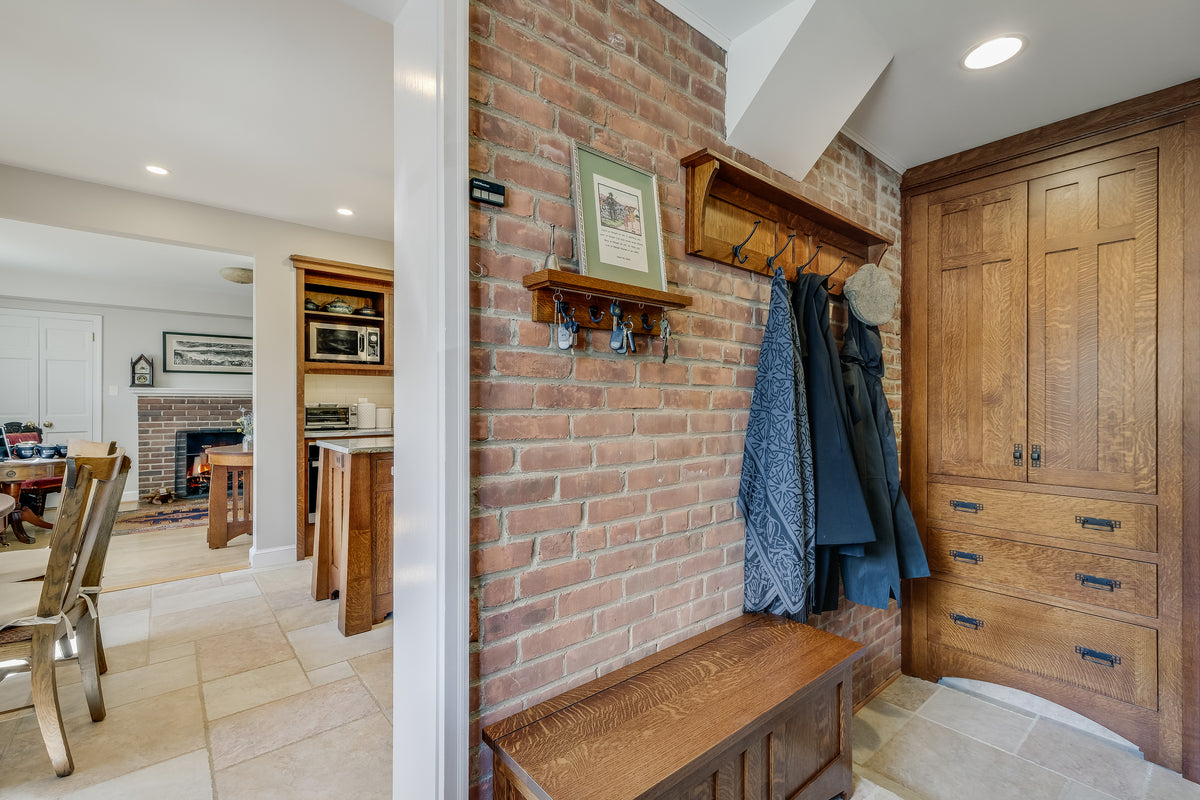
Oak suits a big built-in. A wall of shelving or a run of lockers is a lot of surface at once, and oak's figure keeps all that surface from reading as a blank plane. It also carries weight well. Deep face frames, wide stiles, and visible joinery all look at home on oak, which is why so much American built-in work was made from it. Closet systems, window seats, media walls, and office built-ins get built the same way a kitchen does, in the same finish.

How Oak Looks and Takes Finish

Oak runs from a pale tan to a warm reddish brown, with open pores visible in every board. Plain-sawn boards carry the wide arches most people recognize; boards cut closer to the quarter come out straighter and quieter.

Finish is where oak changes most. A stain settles into the open pores and sits lighter on the wood between them, so the grain steps forward rather than disappearing. A grey or a near black does the same thing in reverse, holding the pattern while pulling the warmth out of it. Oak never hides what you put on it.

Every Hardwood We Build In

Oak is the most familiar of the seven hardwoods we build in. The other six each read differently in a room.

Brown Maple
Brown Maple

The wood painted kitchens are built from, with almost no grain to show through the color.

Cherry
Cherry

Starts light and darkens for years, so the color comes from the wood rather than a stain.

Hickory
Hickory

The hardest wood we build in, with a color range that can swing across a single door.

Briar-Hard Maple
Hard Maple

Near white and close-grained, for a kitchen where the cabinets stay in the background.

Natural-Quartersawn White Oak

Quartersawn White Oak

Straight grain with ray fleck, cut the slow way for a craftsman kitchen.

Walnut

Walnut

Deep brown from day one, with no stain needed to get there.

Ready to Design Your Oak Cabinets?

Tell us what the oak has to sit next to, and our design specialist will narrow 65 finishes down to a few. Our Brentwood showroom has them full size if you would rather look. Our designers spec the room, and Amish and Mennonite shops in Ohio and Indiana build it. Installed around Nashville, shipped nationwide.
Book a Consultation

Frequently Asked Questions

Oak is a North American hardwood that grows in visible rings, which is the reason for its open pores and strong grain pattern. It is hard, heavy and stable, and it has been the default cabinet and millwork wood in American houses for well over a century.
No, though the honey-toned finish that dominated the 1990s is what most people picture. Oak is a wood rather than a look. The same grain under a grey, a near-black, or a clear matte reads nothing like the kitchen that phrase brings to mind.
Yes. Oak is one of the harder species we build in, and the open grain works in its favor: scuffs and small dents land in a surface that already has texture rather than on a smooth one. It ages without starting to look tired.
The cut. Plain-sawn oak gives the wide cathedral arches most people recognize. Quartersawn boards are cut across the growth rings instead, which produces straight grain and the ray fleck associated with craftsman and mission kitchens.
Oak can take opaque finishes, but the open pores stay visible through them. Some people want exactly that texture under a color. If you are after a completely flat painted surface, brown maple is the wood built for that job.
Room size, the line you build in, and the detail in the doors account for most of the difference between two oak kitchens. Species moves the number far less than any of those. A consultation is the fastest way to a figure for your own layout.
It depends on the line. Stock is ready in 2 to 3 weeks, semi-custom runs 4 to 8 weeks, and a fully custom build takes 8 to 12 weeks.