Trusted by those who value real craftsmanship

Why Choose Quarter-Sawn White Oak Cabinets? 

You choose quarter-sawn white oak for the ray fleck, the pale ribbons of figure that only this cut brings to the surface. They come from the medullary rays, bands of cells running from the center of the trunk outward, and sawing the log radially cuts along those rays rather than across them. Plain-sawn boards from the same tree barely show them.

Behavior is the second reason, and the one that lasts longer than the first impression. A quarter-sawn board swells and shrinks across its width at roughly half the rate of a plain-sawn one, so panels stay flat and joints stay tight through a humid August and a dry February. Furniture makers paid the premium for this cut long before anyone treated it as a style.

See the Fleck Catch the Light

The flecks catch light at an angle, which is the one thing a product photo flattens out. Under a lamp the figure surfaces and vanishes as the angle shifts, and a screen only ever shows you one of those angles. Samples are $12.
Order a sample
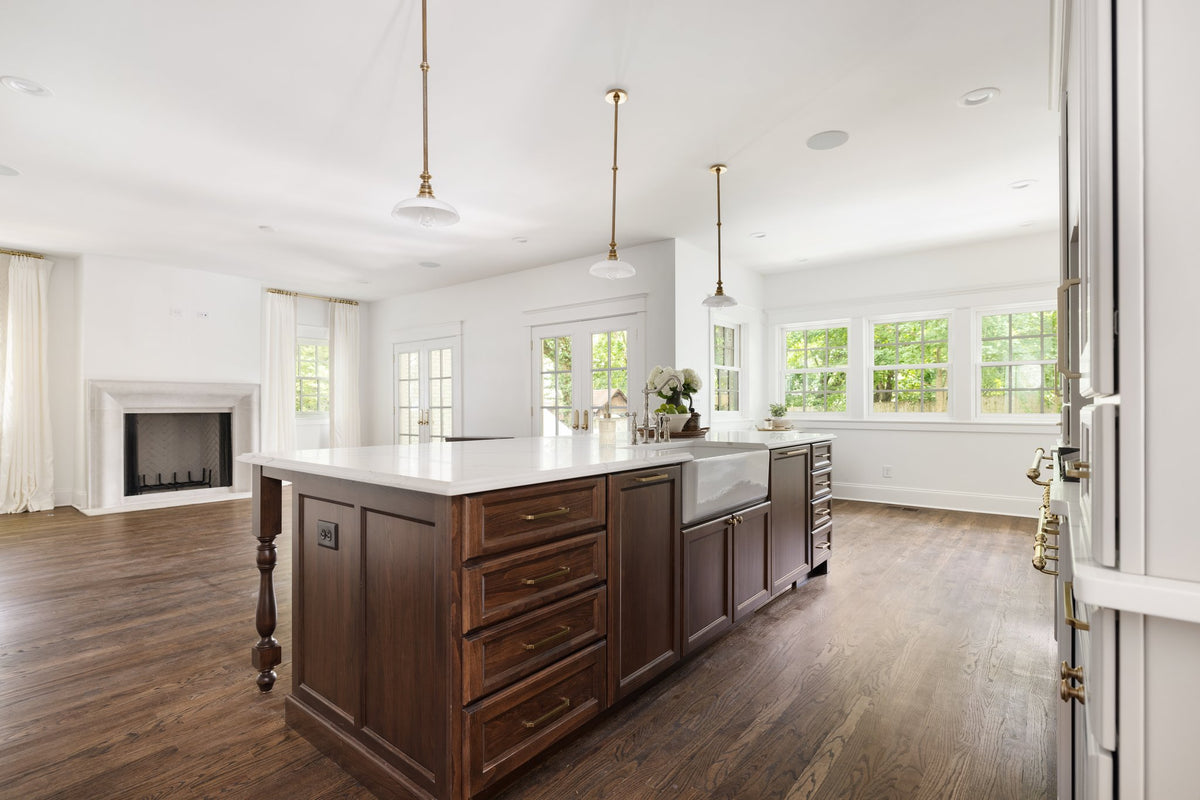
Kitchen Cabinets

Kitchen Cabinets

A quarter-sawn white oak kitchen is usually a Craftsman one. Straight grain suits square frames and flat panels, and the mission and shaker doors people pair with this wood were drawn around it a century ago. Where the fleck lands depends on the size of the surface. A tall pantry door or a long run of drawer fronts gives the figure room to travel, while a small upper carries only a flash of it. That is worth knowing when you decide which cabinets get glass and which stay solid.

View more →
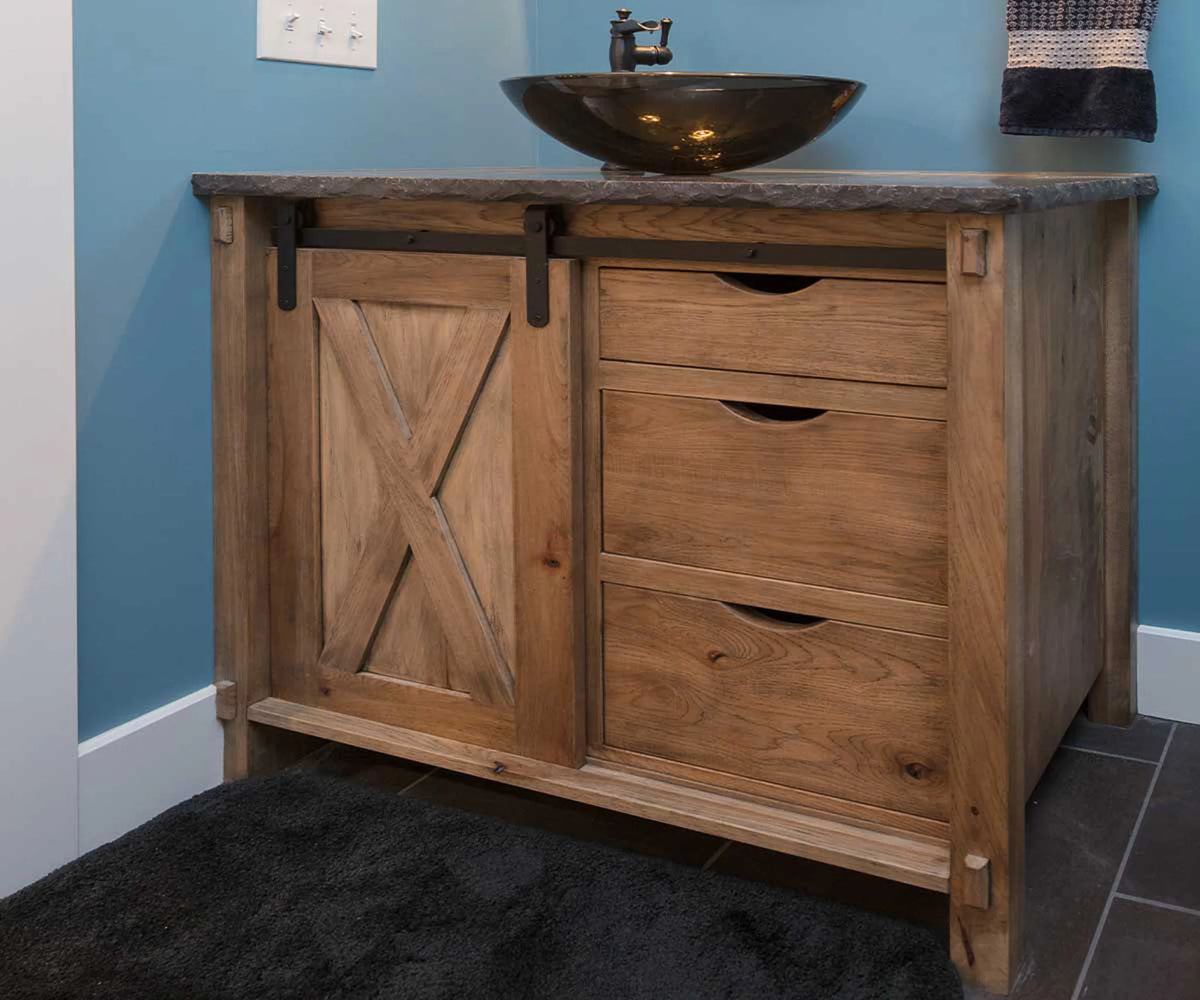
Bathroom Vanities

Bathroom Vanities

A bathroom is the hardest room in the house on a wood cabinet, and quarter sawn white oak is built for it. The species seals its own pores as it grows, filling the cells with tyloses, which is why coopers have used it for centuries to build barrels that hold liquid for years. The cut adds to it. A vanity sits a few feet from a shower and rides the humidity up and down twice a day, and quarter-sawn stock absorbs that cycle with less movement than a plain-sawn board. We build vanities from powder room widths through doubles, sized to your plumbing.

View more →
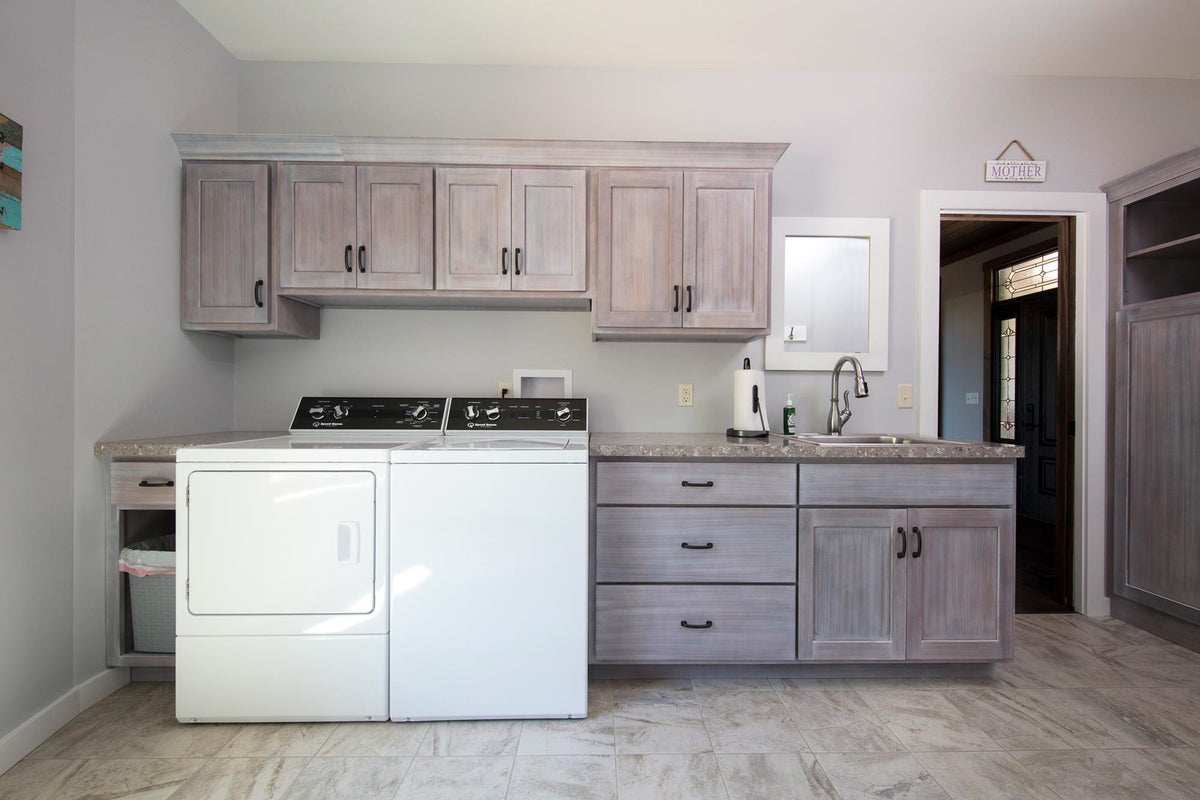
Laundry and Utility Cabinets

Laundry and Utility Cabinets

A folding counter is a wide, flat, unsupported surface, which is the hardest thing you can ask of a board. Quarter-sawn stock cups far less than plain-sawn, so the counter stays true instead of rocking once the room has been through a damp summer. The same holds for tall doors on broom and utility cabinets, where a slight twist is the difference between a door that closes and one that catches. We build base and tall cabinets, folding counters, sink surrounds and hanging space in it, carried through in one finish.

View more →
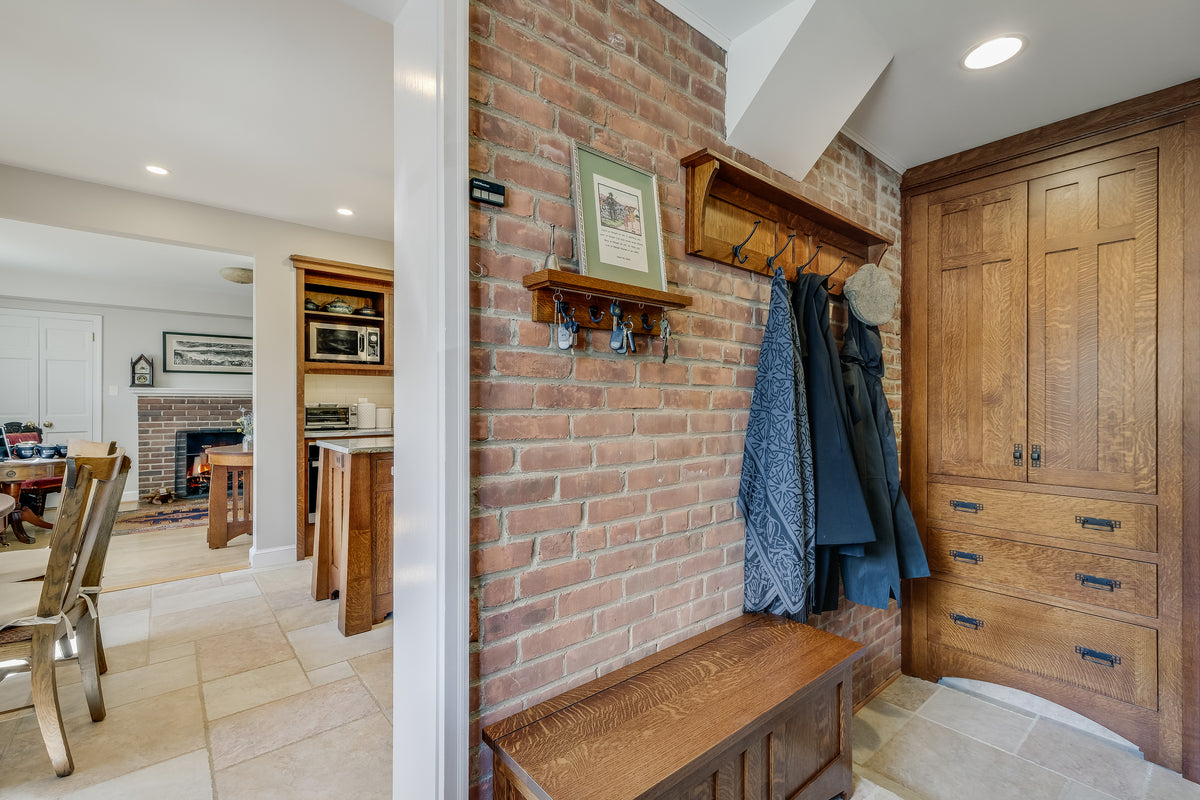
Storage and Built-Ins

Storage and Built-Ins

Quarter-sawn white oak defined the Arts and Crafts movement. The bookcases, window seats and inglenooks from that period are almost all this wood and this cut, which is why a built-in in it reads as part of the house rather than as furniture pushed up against a wall. Scale rewards it. A full wall of shelving gives the fleck somewhere to run, and the straight grain keeps long stiles and rails looking deliberate rather than busy. Closet systems, media walls and office built-ins come out of the same shops, in the same finish.

View more →

 How Quarter-Sawn White Oak Looks and Wears 

The color runs pale tan to a soft olive brown, and the grain travels straight down the board instead of arching. Fleck appears as irregular pale bands, an inch across in one place and a thread in the next, and it is never spread evenly. Two doors from the same log will not carry the same amount.

With age, the background ambers and the fleck separate from it more clearly, so the figure becomes easier to see rather than harder. The surface is dense, and because the earlywood cells are blocked, a spill sits on top of the finish instead of finding a route into the wood.

Every Hardwood We Build In

Quarter-sawn white oak asks the most of a log and gives the most figure back. The other six we build in each make a different argument, and one of them may be the better fit for your room.

Brown Maple
Brown Maple

The wood painted kitchens are built from, with almost no grain to show through the color.

Cherry
Cherry

Starts light and darkens for years, so the color comes from the wood rather than a stain.

Hickory
Hickory

The hardest wood we build in, with a color range that can swing across a single door.

Briar-Hard Maple
Hard Maple

Near white and close-grained, for a kitchen where the cabinets stay in the background.

2FC-Plain Sawn White Oak-Samples-Granola D22N11322-The Amish House

Oak

Open grain and warm color, the wood most people picture when they picture a kitchen.

Walnut

Walnut

Deep brown from day one, with no stain needed to get there.

Ready to Design Your Quarter-Sawn White Oak Cabinets?

Where the fleck lands depends on which doors get the widest panels, and a design specialist will plan that with you before anything is cut. Our Brentwood showroom has full doors if you would rather see it first. And our Amish and Mennonite craftsmen in Ohio and Indiana build it. Installed around Nashville, shipped nationwide.
Book a Consultation

Frequently Asked Questions

It is white oak sawn radially, so the growth rings meet the face of the board at a steep angle instead of running parallel to it. The cut yields fewer boards per log and takes longer, and in exchange it produces straight grain and visible ray fleck.
Medullary rays are bands of cells that run from the center of a tree outward, carrying nutrients sideways. Sawing radially cuts along them and exposes them as pale, irregular flecks on the surface. White oak has unusually large rays, which is why the effect is strongest in this species.
Yes, measurably. Wood moves roughly twice as much tangentially as it does radially, and quarter-sawn boards are oriented so the smaller figure governs their width. Panels cup less, doors twist less, and seasonal gaps at the joints stay smaller.
The log is cut into quarters first and then sawn outward from the center, which produces narrower boards and more waste than running a log straight through. You are paying for yield and labor rather than for a rarer tree.
Yes. It is hard, dense, and the species has blocked pores that resist moisture, so it copes with the humidity a working kitchen produces. The flat, straight grain also suits the square door styles most kitchens in this wood are built around.
Craftsman, Mission and Prairie rooms are its natural home, since the movement that made those styles famous used this exact cut. It also works in a plain contemporary kitchen, where the straight grain gives a flat slab door something to look at.
Stock is ready in 2 to 3 weeks and semi-custom runs 4 to 8. A fully custom build takes 8 to 12 weeks, and the door style tends to move that more than the species does.