Trusted by those who value real craftsmanship

Why Choose Painted Cabinets?  

You choose paint when you want the color to be the decision and the wood to stay out of it. A painted door reads as one flat plane, so what you notice is the door style, the hardware and how the color sits against your floor. It can also be matched to your trim, which a stained kitchen never can. The painted doors we have built run from Chantilly Lace through to Rock Bottom.

What separates one painted kitchen from another is underneath. Three products look identical on day one: a hardwood door, a door with a board panel, and a thermofoil door, which is a printed skin over a core. They part company at the first knocked corner. A lifted skin shows a pale core that cannot be sanded. Hardwood is sanded at the damage and recoated on site, and the repair disappears into the color around it.

White Is Never Just White

Every white paint carries an undertone, and it only declares itself once the color is on a door in your own room. The same white reads warm beside oak flooring and cold beside grey tile, and a chip that looked clean on a screen can turn yellow or pink on the wall. Samples are $12.
Order a sample
Kitchen Cabinets

Kitchen Cabinets

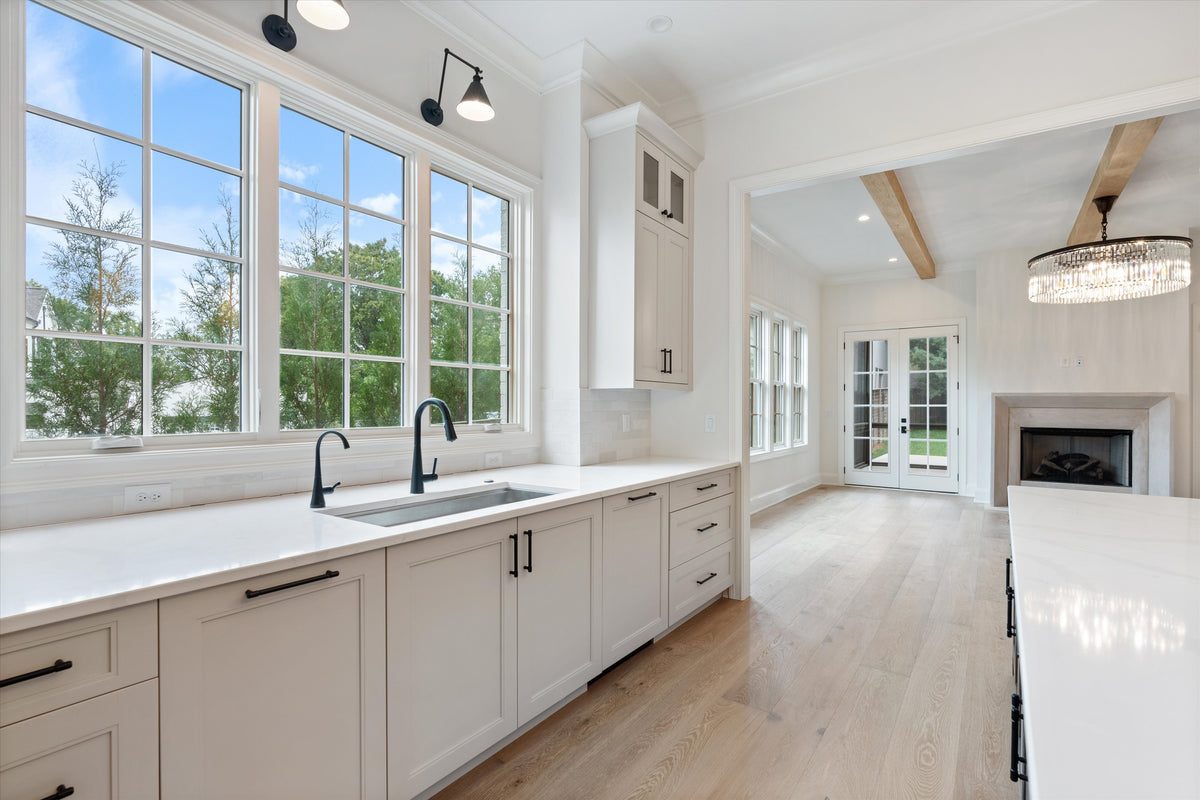
A painted kitchen solves a matching problem that a stained one cannot. Trim, walls, and cabinets can all be pulled to the same color, or deliberately set a shade apart, which is a conversation you cannot have when the cabinets carry a wood color of their own. It also makes splitting the room straightforward. A white perimeter with a darker island, or painted uppers over stained bases, puts weight at the center of the kitchen without darkening everything. Both halves are drawn and finished for the same job rather than matched to each other afterward, which is where most two-tone kitchens come unstuck.

View more →
Bathroom Vanities

Bathroom Vanities

A bathroom is the smallest room paint has to work in, and scale changes which colors hold up. A strong color across a full kitchen can overwhelm a powder room, while the same shade on a single vanity reads as a deliberate accent against white tile and porcelain. Closed grain earns its keep here more than anywhere else in the house. A sealed painted surface needs something smooth to bond to, which is why painted vanities handle daily steam without the finish lifting along the edges. We build them from powder room widths through doubles, sized to your plumbing.

View more →
Laundry and Utility Cabinets

Laundry and Utility Cabinets

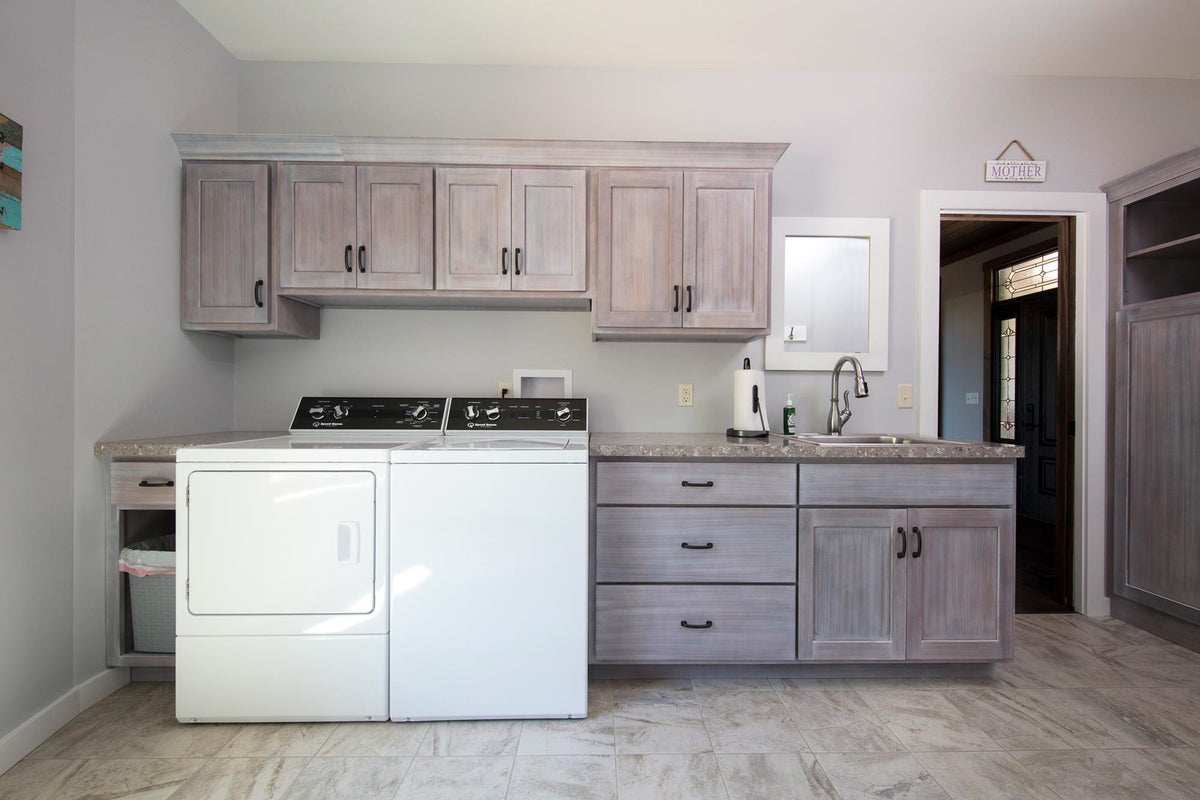
Laundry rooms put painted cabinetry through more direct abuse than any other room in a house. Baskets swing into door fronts, detergent runs down a cabinet side, and something heavy lands on the folding counter most weeks of the year. Paint is the finish that recovers from all of it, which is the practical reason it belongs in a working room and not only in a show kitchen. A scuffed door is sanded at the damage and recoated in place. We build base and tall cabinets, folding counters, sink surrounds and hanging space, finished to match the room it opens onto.

View more →
Storage and Built-Ins

Storage and Built-Ins

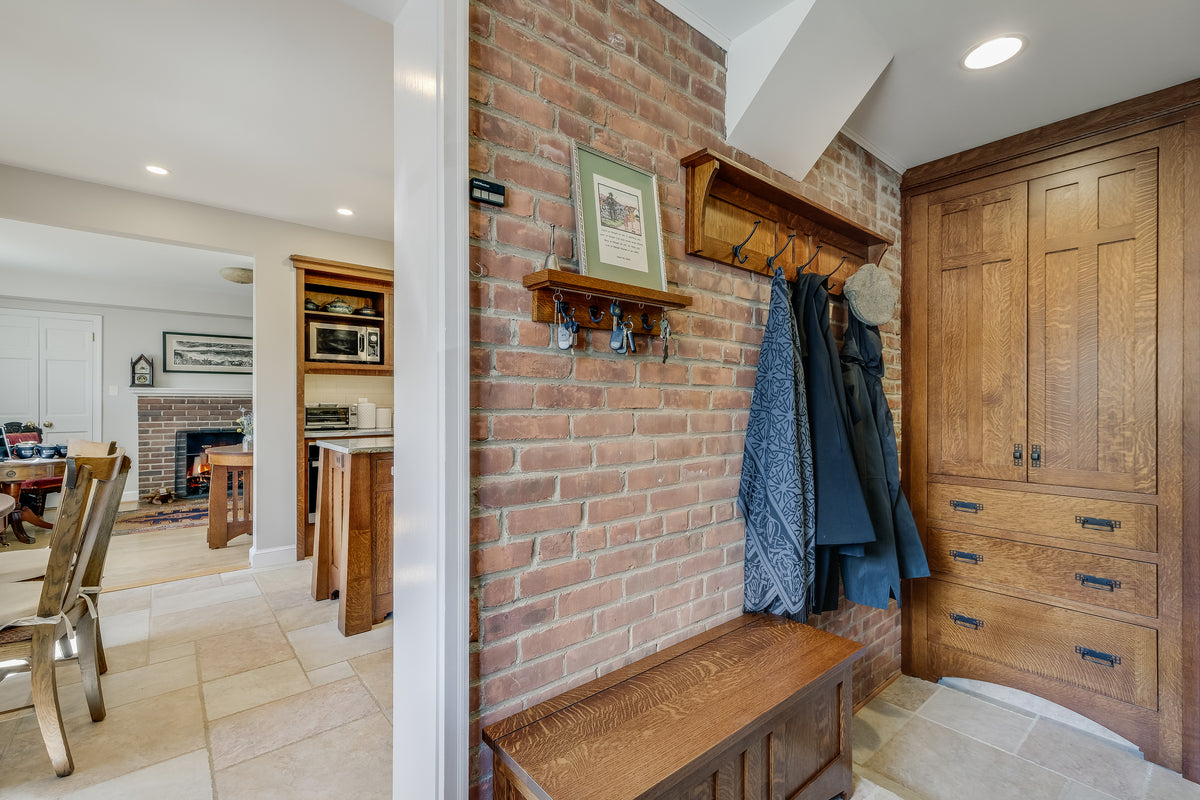
A built-in has a harder job than a kitchen cabinet. A kitchen is allowed to be its own thing, while a wall of shelving or a run of lockers has to look like it was part of the house from the beginning, and that is a color problem before it is a woodworking one. Paint is what solves it. A color pulled to your existing trim reads as the same white rather than a near miss, and a closed-grain surface holds that color exactly as it was mixed. Mudroom lockers, closet systems, media walls, window seats and office built-ins all leave our shops finished to the trim they will sit against.

View more →

How Paint Sits on Different Woods  

Paint is opaque, so it covers color completely but not texture, and that single fact decides which wood belongs under it. Brown maple is the default here because its pores are closed and it sands flat, so the door comes out as one plane and the only thing you see is the color. That is why almost every painted door in our range is built from it.

Other species will take an opaque finish, and the texture stays visible through the color. On oak the open pores read as fine valleys under a white, which is a deliberate choice in a farmhouse kitchen and a disappointment in a contemporary one. On a figured wood like hickory, paint covers the character people pay for. If you want paint over visible grain, tell us the species and we will show you what it does before anything is ordered.

Ready to Design Your Painted Cabinets? 

Choosing between your options is where most people stall, and our design team does it every week against real floors, counters and daylight rather than against a chart. Send us the room, or come and stand in front of the painted doors in our Brentwood showroom. Our Amish and Mennonite craftsmen in Ohio and Indiana build what you settle on. Installed around Nashville, shipped nationwide.
Book a Consultation

Frequently Asked Questions

Ours are hardwood, most often brown maple, which is the heartwood of the soft maple tree. It is close-grained with very little visible figure, which is what you want beneath an opaque finish, and it has been the standard painted-cabinet wood in American shops for decades.
Any painted surface can chip at a corner that takes a direct hit. What matters is what happens next. A painted hardwood door is sanded at the damage and recoated in place. A foil or laminate front cannot be repaired that way, because the surface is a skin over a core rather than part of the door.
Any of our species can take an opaque finish. Brown maple is the default because its closed grain gives a completely flat surface. On open-grained woods the pore texture stays visible through the color, which is worth seeing on a sample before you commit either way.
If your doors are solid wood and structurally sound, painting them is often the better value and we will tell you so. If they are foil, laminate or printed veneer, paint will not hold at the edges and new doors usually cost less over ten years. We do not reface or refinish, so there is no sales pitch in that answer either way.
That is seasonal movement and a sign of solid construction rather than a defect. Wood takes on and releases moisture as indoor humidity changes, and a panel shrinking slightly inside its frame can expose a hairline at the paint film. Holding the house between 30 and 50 percent relative humidity keeps it minimal.
Yes, and it is one of the most common things we build. A painted perimeter with a stained island is the usual arrangement. Both are produced in the same shop for the same job, so they are made to work together rather than matched after the fact.
Paint is a finishing process rather than a material upgrade, so the price moves on the same things as any other kitchen: the size of the room, the line you build in and how much detail the doors carry. A consultation gets you a figure for your own layout.